

Desmós
Stories, prayers, musings and other creative inspiration
to strengthen the BOND at Village Church.
Something Like...

I’m not used to not getting what I want. I’m not used to being told I can’t go to Tandem. I’m not used to not being able to buy all the baby carrots and bananas and spinach I want. I’m not used to having to stand in a long line at Aldi when I go early on a Thursday morning. I’m not used to having my kids home all day every day. I’m not used to having my kids on screens for schoolwork. I’m not used to planning meals with the thought that I might not have avocados.
But what I am used to is staying home. I’m used to sitting outside and thinking. I’m used to taking walks and thinking some more. I’m used to reading books. I’m used to texting my friends to stay in touch. I’m used to trying to put my experiences into words.
While much has changed in my particular life due to COVID-19, much has also stayed the same. I’m thankful for both, actually. I feel like I am having a more full human experience by having to accept what I cannot change right now. I’m also finding some enjoyment in trying to find a mental construct in my brain in which to place this experience, “a peg to hang it on,” so to speak. I keep straining to figure out what this experience is like, to then be able to say, Oh I know, it’s like that other time….but most of the comparisons I have come up with are not even things I’ve personally been through. So I can’t say I know. But here are some things I have been pondering this past week:
Is this something like racial segregation, being told I can’t go in a certain store or restaurant?
Is this something like a concentration camp, living with suffering and not knowing how long it will last?
Is this something like poverty, not getting to buy the food I want for my family?
Is this something like prison, not being allowed to leave the premises?
Is this something like summer, with kids home all the time and minimal time alone?
Is this something like loneliness, wishing for human interaction and not knowing how to get it?
Is this something like having a child with a terminal illness, always being careful where they go and what they are exposed to?
Is this something like Jesus in the Garden, wanting to have company in his suffering?
Is this something like the persecuted Church, not being allowed to meet together?
Is this something like Heaven, time out of time or beyond time?
I am grateful for these tastes of other ways many people have lived or are living still. I am not used to not getting what I want, but I am more used to it than I was a week ago. I have moved closer to the center of the human experience and I know God is sitting with me in this tiny bit of suffering as He has sat with those who have suffered and continue to suffer much more than I do. Praise Him for making all things new, even my selfish heart that has known so little need. I need avocados and bread and to not get what I want.
His Eye is on the Sparrow
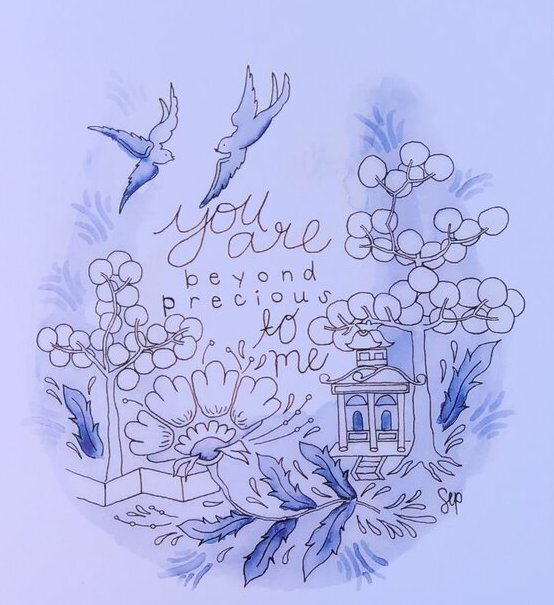
Handmade stationary from goodandsaltypaper.com
I am self-quarantined after traveling at the outbreak of the COVID-19 pandemic, and I sense the growing anxiety in our world; the overwhelming questions of what these future days will hold are reason enough to melt into an epidemic of worry and panic as contagious as the virus itself.
With the gift of Spring, though, the lock-down weight doesn’t feel as heavy. I sit at my corner bedroom desk, window open, and let nature’s evening lullaby serenade me with a dozen distinct chirps and trills. I have caught glimpses of fire-red cardinals sweeping through the sky and auburn-chested robins pecking at the ground. They delight in the day and lead me to do the same.
Even before the Coronavirus outbreak, the birds had already been serving as a small mercy to me. One of the strongest yearnings (idols?) of my heart is to be taken care of. I don’t love wading into my late twenties alone and uncertain. God, do you hear me? I know you do, but…can I trust you to respond?
The past few years, that plea has been the brushstroke painting my prayers. The lonely unknowing can be paralyzing, but Jesus is Lord over those fears. As He teaches in the Sermon on the Mount,
Look at the birds of the air: they neither sow nor reap nor gather into barns, and yet your heavenly Father feeds them. Are you not of more value than they? -Matthew 6:26
Last month, I stumbled upon Audrey Assad’s song “Sparrow”. Based on this verse in Matthew, it resonated with me deeply:
“Why should I be lonely, Long for heaven and home
When Jesus is my portion And a constant Friend I know
I sing because I'm happy, I sing because I'm free
For His eye is on the sparrow, And I know He's watching me”
After worshiping through this song one morning, the Lord kept reinforcing throughout that day the truth of how much He cares for us and how He has already brought us freedom:
He reminded me through my roommates’ Valentine’s Day stationary framed in our living room. Decorated with ornate porcelain China sparrows, it reads You are beyond precious to me.
He showed me in poster putty I mashed together as I removed some signs on the office walls...that just morphed into a bird model.
Walking my dog, I heard the neighborhood birdsong in a way I had previously been deaf to.
What?!
Listen to me. Lean into me. I’m holding you, and I won’t let go.
In the wake of the Coronavirus spreading across the country, Jesus’ message of value for me has taken on new meaning. I’m not just concerned about loneliness. In the disruption of routine and business operations, I’m wondering about my job description (and security) and how long we’ll have to slog this out. Many of you probably feel the same hailstorm of scary, unanswerable questions.
Perhaps the birds can help us, modeling how to take each day as its own gift, listening to the Lord and trusting his faithfulness and provision. God hears us. He values us. He LOVES us. His eye is on the sparrow. It’s certainly on us, His treasured children, too.

The House of Love

Icon: “The Holy Trinity” — written by Rublev
This weekend as I picked up my consecrated communion bread from the church fellowship hall, saddened to not physically worship together, my mind has kept coming to this icon of the Holy Trinity, painted by the Russian artist Andrew Rublev.
This icon depicts a scene from Genesis 18 where three mysterious, angelic figures visit Abraham and Sarah at the Oaks of Mamre. The three figures represent the Trinity—the Father, Son, and the Holy Spirit—the figures themselves aren’t images of the persons of the Godhead, but their features and orientation toward each other are a symbolic representation of the relationship between them.
The composition of the painting creates a circle of movement between the three figures, with Christ in the center. Looking closely, you notice an opening into this circle, which leads your eyes to the altar table. This inward movement is an invitation to come to the table, and to be present in communion with the Holy Trinity. In other words, are invited into the fellowship of God. Henri Nouwen refers to this painting as ‘the house of love’—showing us a circle of love that is always on offer, and that is never to be broken by the powers of this world.
Thinking of that offer, I am reminded of Jesus’ words, “Remain in me, as I also remain in you. No branch can bear fruit by itself; it must remain in the vine...” –John 15:4.
I have read that the Greek word here for ‘remain’ means “to take up permanent residence”. In this verse, then, Jesus is telling his followers to take up permanent residence in Him—not just occasionally, but as a branch connected to its very life source. This is how I understand the invitation to come to the table in fellowship with Him, the Father, and the Holy Spirit, in the ‘house of love’ that the icon depicts.
As we find ourselves physically separated from each other in the coming days, may we be reminded that we are never apart from the presence of Christ, living in our hearts. May we be reminded that we are united in the Spirit, and that the invitation to dwell in the house of love is ever before us.
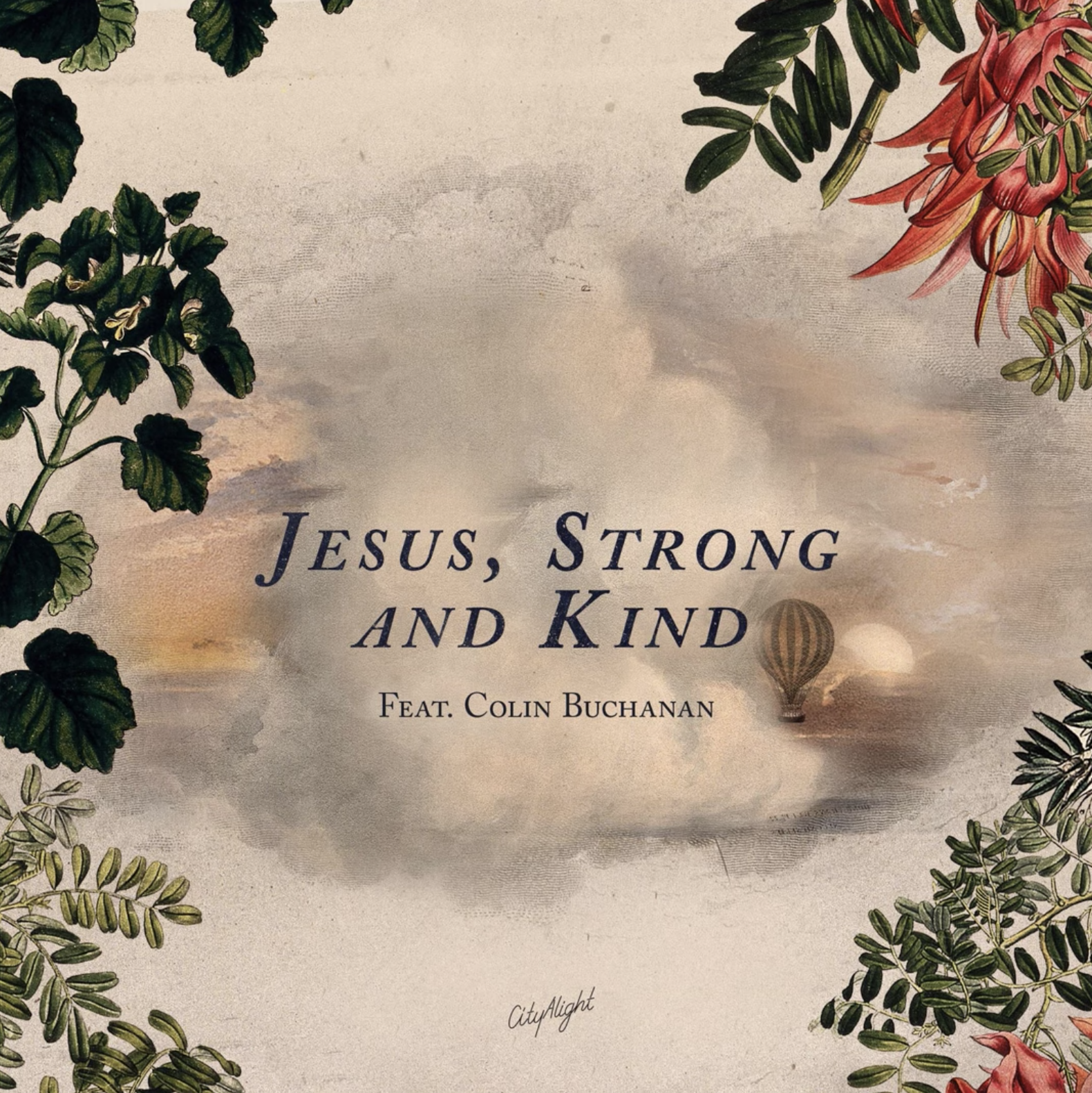
Jesus, Strong & Kind
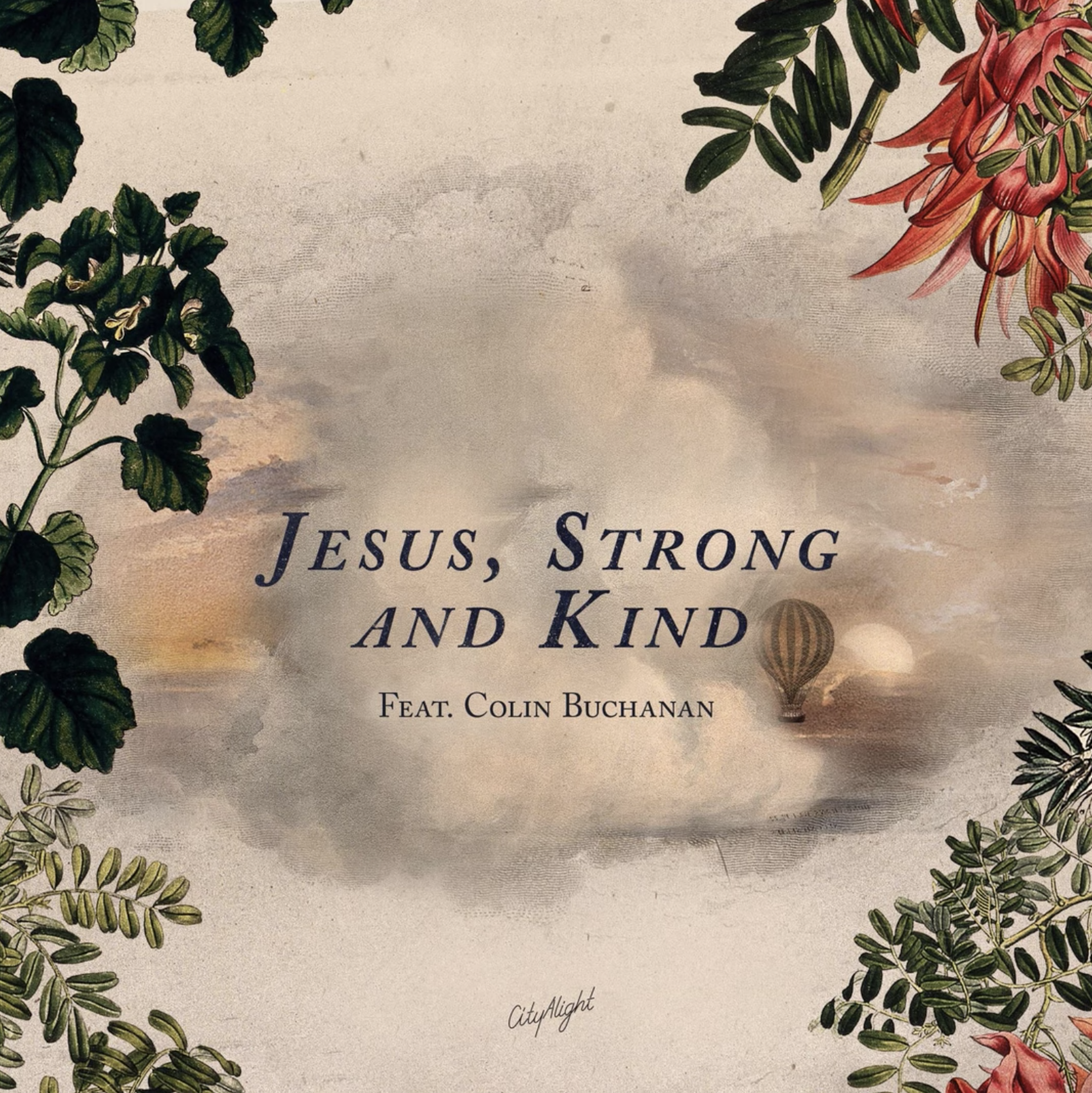
I want to share this song with you today, one that not only moves me for its simplicity but also because of the children’s choir who sing the chorus so beautifully. It’s comforting to me whenever I hear children sing, and it reminds me that my faith is meant to be expressed as trust in my Father. I would add, it’s a great reminder during Lent that our weakness, morally, bodily and emotionally, are met with the strength and kindness of Jesus.
You may like to play it for or teach it to your children as a Lenten emphasis and in these uncertain and stressful times. Hat tip to Alec Smith, our former worship director (now at Church of the Resurrection in Wheaton, IL) for sharing it with me.
Love to all,
Seth+
Jesus said that if I thirst
I should come to Him
No one else can satisfy
I should come to Him
Jesus said, if I am weak
I should come to Him
No one else can be my strength
Jesus, strong and kind
For the Lord is good and faithful
He will keep us day and night
We can always run to Jesus
Jesus, strong and kind
Jesus said that if I fear
I should come to Him
No one else can be my shield
I should come to Him
Jesus said, if I am lost
He will come to me
And He showed me on that cross
He will come to me
Praying with the Saints

The psalm for morning prayer today is Psalm 46, which as I read it felt very timely for our present circumstances:
God is our refuge and strength,
a very present help in trouble.
2 Therefore we will not fear though the earth gives way,
though the mountains be moved into the heart of the sea,
3 though its waters roar and foam,
though the mountains tremble at its swelling. Selah
4 There is a river whose streams make glad the city of God,
the holy habitation of the Most High.
5 God is in the midst of her; she shall not be moved;
God will help her when morning dawns.
6 The nations rage, the kingdoms totter;
he utters his voice, the earth melts.
7 The Lord of hosts is with us;
the God of Jacob is our fortress. Selah
8 Come, behold the works of the Lord,
how he has brought desolations on the earth.
9 He makes wars cease to the end of the earth;
he breaks the bow and shatters the spear;
he burns the chariots with fire.
10 “Be still, and know that I am God.
I will be exalted among the nations,
I will be exalted in the earth!”
11 The Lord of hosts is with us;
the God of Jacob is our fortress. Selah
Today is also the Feast day of St. Joseph in the Church, so we remember his life and how he cared for Jesus and his mother during their most vulnerable time. And as I read Psalm 46 this morning, I imagined Joseph praying this psalm as well. I remembered the countless men and women who have gone before us, throughout history and around the world, who have claimed these promises of God during seasons of trial.
Joseph had a pregnant wife to care for on a long journey to Bethlehem. Then they faced a shortage of beds when they arrived. After the birth of Jesus, he was warned that Herod was plotting to kill his newborn son, so they had to flee to Egypt to hide; they were displaced for a number of years because of forces beyond their control. It’s easy to imagine the vulnerability and powerlessness he felt in the midst of these things— these forces that alter the course of our lives, that disrupt our plans and our hopes and our sense of control or even safety. “The nations are in an uproar, and the kingdoms are moved.” It was true for the psalmist and it is true today.
But it’s comforting to know that we are not alone in this. We belong to a people who have lived it before; who’ve been afraid and who have suffered and who have cried out to God in the midst of it all. We belong to the communion of saints, throughout history and around the world. So we join our voices with theirs when we say, “God is our refuge and strength, a very present help in trouble. Therefore we will not fear, thought the earth be moved; though the the mountains be moved to the heart of the sea…The Lord of Hosts is with us, the God of Jacob is our refuge.” Amen.
Reward of Love

Sees in Secret - Katie Gerdt
I don’t know why I was surprised when I was handed a drawing of a kneeling stick figure receiving money bags from God. My kids had been asked to visualize Jesus’ words about prayer: “Your Father who sees in secret will reward you” (Matthew 6). Clearly “reward” meant something pretty specific in the mind of an elementary school boy!
But honestly, my own concept of reward is just as narrow. I can’t tell you how many times I have felt disappointment when a conversation or a Bible study lesson or an act of service “didn’t get the response” I was hoping for. Looking for these external rewards actually becomes punishing--our energies bound up in formulating words or forcing situations, our happiness and rest contingent on certain reactions or results. Our hearts harden into stone, the strength of which is measured by its ability to act upon other surfaces.
A tree, on the other hand, is strong when it interacts with its environment: taking in sunlight and nutrients, producing oxygen and fruit. Being planted in the Trinity’s loving gaze and flowing grace enriches our hearts “so that in every way, always having everything we need, we may excel in every good work” (2 Corinthians 9). Such an abundant life is its own reward, springing up from our inner experiences with God, sanctifying our work, blessing our relationships with each other, and enduring long after words of affirmation or signs of success fade away.
In confident expectation of this goodness, we continually return to the secret places with God. Through weekly patterns of confession and repentance we acknowledge how quickly poisonous seeds of pride, jealousy, bitterness and fear can take root. Our times of quiet contemplation and reflection in the presence of God’s Word and Spirit are an active defense against whatever threatens the Life we treasure. Like Abraham, we courageously resist letting anything else be our prize in order that we may know the blessing and richness of friendship with the LORD, God Most High, Creator of heaven and earth.
The Anvil

“Last eve I paused beside the blacksmith’s door,
And heard the anvil ring the vesper chime;
Then looking in, I saw upon the floor,
Old hammers, worn with beating years of time.
“‘How many anvils have you had,’ said I,
‘To wear and batter all these hammers so?’
‘Just one,’ said he, and then with twinkling eye,
‘The anvil wears the hammers out, you know.’
“And so, I thought, the Anvil of God’s Word
For ages skeptic blows have beat upon;
Yet, though the noise of falling blows was heard,
The Anvil is unharmed, the hammers gone.”
- John Clifford (1836–1923)
Come & See

Katie Gerdt - 2020
As I gripped my boys’ hands, waiting to cross Old Buncombe on Sunday morning, I silently begged Holy Spirit to assure their little hearts that they belong at Village Church--that God’s Kingdom, God’s family, is for them. In that moment I realized the concern for them reflected my own fear, my own sense of scarcity. Every time I come to church, there’s a niggling sense I might be edged out by the other hungry people pouring in through the doors. Many voices throughout my life have told me I must compete for a place at the table, or else get lost in the crowd. How can this wound be healed? Can a life-long beggar learn to trust the abundance of the Feast?
With these doubts swirling, I knelt at the rail after receiving bread and wine on Sunday to pose the very real, very scary, very vulnerable question, “Will there be enough for me, Jesus?” I was answered by an echo of the last words of Michael’s sermon, “Come and see.”
When the beloved disciple John penned his gospel, he compelled his audience not with logical outlines, creeds or mission statements but by pulling up an imaginary chair to Jesus’ powerful interactions with people. “Come close, watch this!” we hear John say. “Look at what happens when people ask questions, pay attention to how Jesus responds!” And those willing to engage with Jesus, to be seen by Him and healed by Him, then turn to others with the same simple but earnest invitation. “Come and see! See the One who told me all I ever did...could this be the Messiah? All I know is that I was blind, but now I can see.”
Come and see--no assurance beforehand of how things will work out or what exactly will be provided. Just an invitation to faith, an invitation to experience Truth through participation. Michael spoke of the risk and blessing we open ourselves up to as we choose to participate. Kill the lamb, spatter the lintels. Step into the churning waters. Forgive your brother. Keep the feast. The only way to see if you belong, to see if there’s enough, is to come. In faith, show up--questions, fears, wounds and all. That’s when God also shows up.
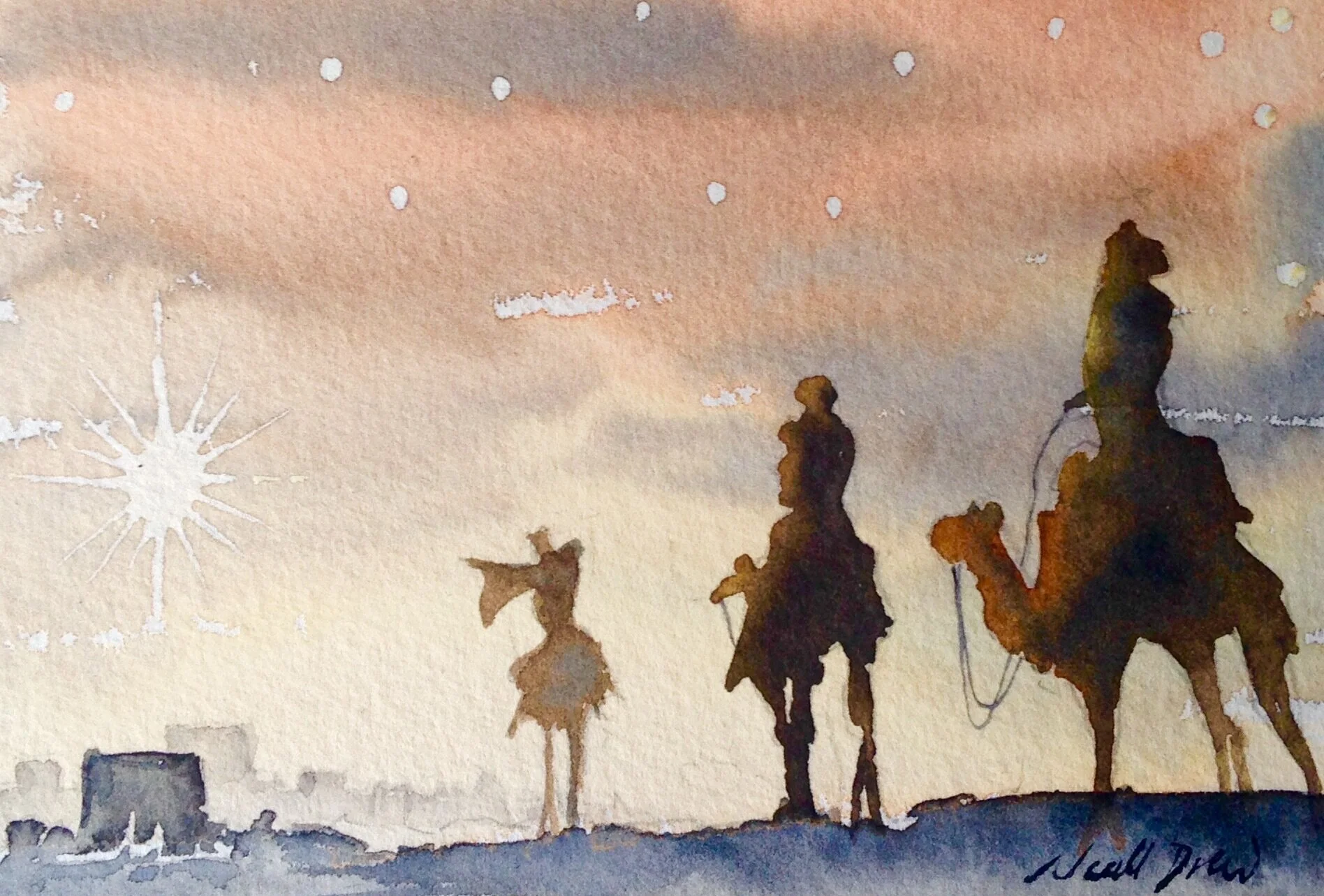
Epiphany: Manifestation & Mission

Most modern nativity sets include some version of “the three kings”—the mysterious Magi who followed the star in order to pay homage to the newborn King Jesus. However, the Western Church has historically set aside a separate Feast Day on January 6 to commemorate this special visit. It’s called Epiphany, and it is not the parenthetical afterthought of Christmas. Rather, like Christmas, Epiphany is the first day of a liturgical season: a period of time that frames our worship and reflection on Christ’s earthly ministry.
The word Epiphany comes from the Greek epiphaneo, meaning “to reveal” or “to make manifest.” The Magi, then, are a fitting introduction to Epiphanytide. Matthew tells us they were “wise men from the East” who followed a star to find Jesus. Essentially, these were pagan kings who practiced astrology—and to whom God revealed Himself.
Through His self-revelation, Jesus turned pagan kings into prophetic worshipers. This profound encounter is an example of the power of the gospel but also a reminder, at the very outset of Jesus’ life, that the King of the Jews is also King of the World. Jesus has come, as Simeon prophesied, “to be a light for revelation to the Gentiles” (Luke 2:32) He has come to be a blessing to all nations, and the One to whom all kings of the earth will one day bring their treasures.
Epiphany, then, is an appropriate culmination to our observance of Christmas. After anticipating the Light during Advent and welcoming Him at Christmas, now we celebrate that the Light will go forth to the ends of the earth. And as Christ’s light converts us, it also sends us outward to the nations. In other words, Epiphany starts with manifestation and ends with mission.
As we enter Epiphanytide, we are invited to reflect on the manifestation of God’s glory in the person of Jesus. It is a season that draws us more deeply into His life and light, and that sends us more fully into mission. As we shall see, the motion of this Light—the life of Christ— is one that ultimately leads to the Cross. Even during Epiphany, we’ll receive multiple foretastes of the suffering in store for Jesus; reminders of just how much it will cost Him to reveal the love of God to a broken world. In this way, Epiphany can also be a season that prepares us for Lent. So may we enter in with expectation— for all that Jesus wants to reveal in and to us.
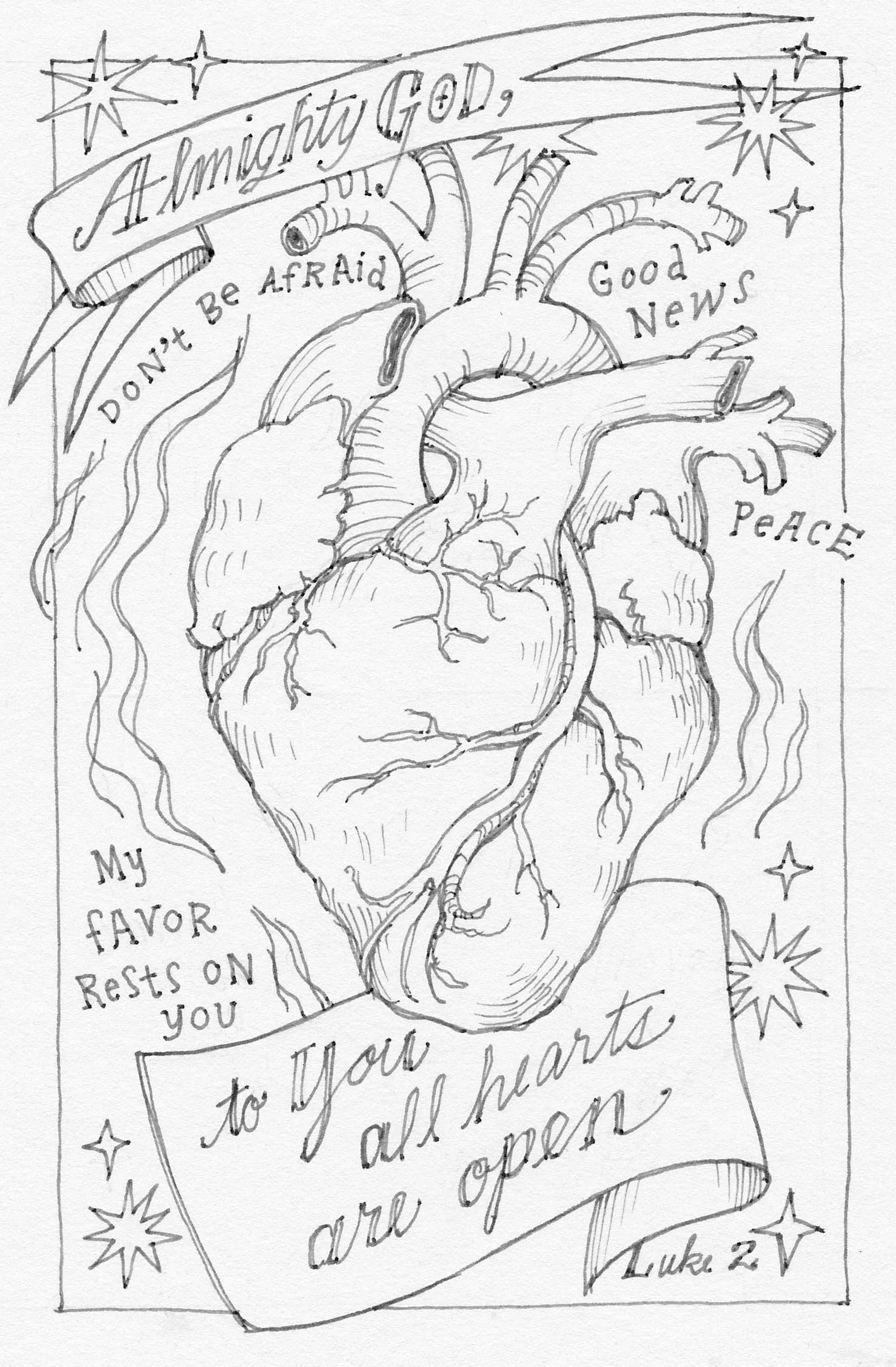
To You All Hearts Are Open

In this final full week of Advent, I want to share this illustration and reflection with you from Katie Gerdt, a fellow "Villager." It moves me to marvel all the more at the God we love - who loved us first. I hope it does the same for you.
Seth+
"Every Sunday morning it feels like I get dressed and come to Village only to be reminded in the first minutes of the service how naked I am. Confronted by the gaze of God.
This past year I spent dangerous amounts of time in the prophetic books, where Yahweh proves He is the God who pays attention and sees everything. He fillets practices and lifestyles, dissecting and laying bare the hidden motives and desires. I think I would rather have the mountains fall on me.
Shame is the place where we feel more known than loved. Where we are exposed, but don’t belong. Where information has extended beyond affection. Our raw vulnerability is unbearable unless we’re convinced of God’s loving posture and intentions.
But throughout the prophets, God exposes His own heart too: Unreservedly and almost pathetically He confesses His desire. The incarnation was God’s final and best proof that He still wants to be with us. The angel’s announcement to the shepherds in Luke 2 meant more to me this year than ever. God is pleased with people and comes in peace! We don’t have to be afraid. Jesus is sent to save us not because God doesn’t like us yet, but because He already does!
That is the kind of Surgeon I can entrust myself to.
That is the kind of Lover to whom I can give my heart."
The wounded surgeon plies the steel
That questions the distempered part
Beneath the bleeding hands we feel
The sharp compassion of the healer’s art…
-T S Eliot