

Desmós
Stories, prayers, musings and other creative inspiration
to strengthen the BOND at Village Church.
Holy Wednesday

Christ before the Pilate by Mihály Munkácsy, 1881, Oil on canvas
"The essence of sin is man substituting himself for God, while the essence of salvation is God substituting himself for man… Man claims prerogatives that belong to God alone; God accepts penalties which belong to man alone."
- John Stott
I’ve had some horrible bosses in my time, especially when I worked in retail. One manager was fired for embezzlement not long after he hired me. His successor, whose moods swung from Ghandi to Ghengis in a matter of minutes, had an affair with our stockroom guy just weeks into her tenure. The quality of these leaders proved to be a direct reflection of the district manager we had. It was a tough two years.
The world is such that great leaders are necessary, but in short supply. And it seems to me many would-be leaders often have a relationship to truth that is driven by self-preservation or self-advancement. Many land in their positions because they’ve reinforced the same compulsion in their own bosses. Corruption spreads by osmosis. Unfit leadership is like a cast iron pipe that corrodes from the inside, polluting the water before it bursts.
But if you’ve ever had a great leader, chances are she was probably noticeably selfless. Did you sense that she could “lead past” herself? If so, you saw her relating to Truth, even if it wasn’t labeled “Christian.”
When you read the account of Jesus’ early morning trial before Pilate in John 18, it becomes clear the Roman prefect is no different than what we so often experience from would-be leaders today. Pilate had no legal basis either to flog and humiliate Jesus or to hand him over for crucifixion, which tells us he was simply trying to appease Jewish authorities — even against his better judgment. He was not contending for justice, but for his own preservation.
Pontius Pilate was the fifth prefect of the Roman province of Judaea from AD 26–36, ruling a relatively small annex of Syria. He was a military leader given command to rule in matters of Roman law in a backwater of the Empire. In short, it was his job to keep the peace and stamp out any insurrection, allowing the bulk of civil law to be handled by local authorities. This is what a prefect did. Justice and truth had little to do with it.
But if the Sanhedrin wanted to kill Jesus, they had to defer to Pilate because they had been mostly stripped of their rights to capital punishment. And the only way Pilate had any jurisdiction here was if Jesus posed a military threat of insurrection, which he clearly did not.
So when Pilate asks Jesus if he is the “King of the Jews,” Jesus responds with a question, “Do you say this of your own accord, or did others say it to you about me?” Jesus is exposing the lie they were leveraging with a question about its origin. Jesus said, “My purpose is to bear witness to the truth.” And Pilate responds, “What is truth?”
It’s just this sort of self-interested relativism that leads to a world on fire. “Who can even say what’s right or wrong?” In the utopia of “my truth” or “your truth,” every person claims a right not just to autonomy, but to leadership. A claim to truth subjects others to it. The obvious problem is that leaders (and everyday people) want the benefit of certain shared ethics, so long as they can decide which should apply at any given time and to whom. This is the sinful heart of humanity writ large — man claiming “prerogatives that belong to God.”
Pilate’s truth tortures an innocent man to death. The Sanhedrin’s truth convicts him against all evidence. Pilate washes his hands. The Council goes back to leadership as usual — back to the Passover for which they were intent on remaining qualified (ceremonially clean) to eat. This warped picture is exactly what is true about humanity apart from God. Our ways are warped. Our truth is leverage.
So, what is truth? Man’s constant capacity for evil, not just in his hard-hearted willfulness to wreak havoc, but also in his soft and slinky self-service, is undeniable. The fragile nature of human leadership is clear and if you’ve ever worked or lived under self-interested leadership, you’ve felt what it does to whole offices, homes, churches and countries.
This is why the incarnation of God was and is necessary. He stands not only bound and subject to Pilate’s leadership, but also in stark contrast to it. Jesus’ humility qualified him to lead. It qualified him to expose other would-be truths. It qualified his name to be on our lips today. The fact that a Galilean peasant is humanly revered by most and divinely worshipped by many speaks to the quality of his Truth. It also speaks to the quality of human leadership that actually follows his lead.
Every day I must ask myself where my own interests might be ahead of the interests of God, which are the best interests of those he loves. Every day my leadership has to do with a truth beyond me that necessarily humbles and reshapes me and my influence. When leadership begins in the humility that characterizes a man or woman in proximal relationship to God — our cosmic anthropology — then truth has a place to manifest and make the world more as it was created to be, one sphere of influence at a time.
Apart from transcendent truth that humbles a man or woman, the world looks like Pilate’s Judaea. It looks like the scene depicted in the painting above — a room full of judges, but no justice. It looks like so much of what we call normal today.
So during Holy Week, we pause to hope for the Kingdom to come fully even as it has already begun to come in our hearts. We pause to consider that a resurrected Jesus is enthroned not on marble or velvet, but on the seat of cosmic Truth at the strong right hand of the Father. His kingdom must come through our lips and our leadership as a Truth making men free, not binding them to the prerogative of authoring their own flaccid truth, the penalties of which God has already taken upon himself in Jesus Christ.
Today's Prayer:
Assist us mercifully with your grace, Lord God of our salvation, that we may enter with joy upon the meditation of those mighty acts by which you have promised us life and immortality; through Jesus Christ our Lord, who lives and reigns with you and the Holy Spirit, one God, for ever and ever. Amen.
Holy Tuesday
by Father Seth Cain
All we like sheep have gone astray;
we have turned — every one — to his own way;
and the Lord has laid on him
the iniquity of us all.
He was oppressed, and he was afflicted,
yet he opened not his mouth;
like a lamb that is led to the slaughter,
and like a sheep that before its shearers is silent,
so he opened not his mouth.
Isaiah 53:6–7

Agnus Dei by Francisco de Zurbarán
I cannot keep my mouth shut in the face of injustice, particularly when it bears down on me. I must confront. I must be vindicated immediately and completely. And if it seems at all right that I should be in and not out, I will wedge myself between the jam and the door being closed upon me . (In modern Enneagram parlance, I am an eight. Don’t judge me. I will fight for you, too.)
Honestly, I cannot be held up too long in the grocery line and made to see outlandish celebrity news magazines unless I can be expected to condescend their readership in proportion to the amount of time I am there, waiting with just milk in hand while someone figures out why the basmati rice is not ringing up on sale. I want more than justice or fair treatment or equality. I want my way in my time. And it is most dangerous when my way appears right and fair and reasonable.
Christ did no such thing, and this may be the most startling aspect of his willingness to be unjustly accused — quietly. He suffered for the very pride that distorts my convictions for justice into a warped, self-defined demand for importance and fairness. And he opened not his mouth.
Humility is able to hold a word. Love is patient. Staring into an absolute vacuum of reason and justice, Jesus didn’t argue. He didn’t protest. He opened not his mouth to suffer for a whole world still spinning in the void of fairness or reason, with us still upon it. He opened not his mouth that he might expose injustice for all time.
How many crosses still adorn homes, churches and necks? And do they still mean that this unjust world steals and kills innocence without a qualm? Does a cross still mean an innocent God suffered silently for a people who have far too much to say for themselves , an endless bevy of curses to spit upon him and each other in the name of our own versions of what’s rightful? Yes, it does. The cross still means all of the above.
He opened not his mouth and thus he suffered in solidarity with the voiceless — those who presume to have no say in a world that would prefer things stay that way. The cross of Jesus means the world is, after all, still hurried, hateful and harangued. And Jesus still suffers with and for the world. For every sin suffered - great or small (if degrees of trespass are such a thing) - he takes it away without a self-preserving word. He takes it upon himself without complaint.
But make no mistake, when it lands upon him with its full weight, he cries out in agony. He cries out as a forsaken Son: “Eloi eloi lama sabachthani!”
“My God! Why…?!” This is what injustice feels like and this is the sound it makes. Jesus cries out again, finally, about those who take their heavy tolls and boldly hurl their insults at him. What does he say? “Father, forgive them. They don’t know what they are doing.”
How is this even possible?
Saint Peter knows…
“When he was reviled, he did not revile in return; when he suffered, he did not threaten, but continued entrusting himself to him who judges justly.”
1 Peter 2:23
The Collect for Holy Tuesday
O Lord our God, whose blessed Son gave his back to be whipped and did not hide his face from shame and spitting: Give us grace to accept joyfully the sufferings of the present time, confident of the glory that shall be revealed; through Jesus Christ our Lord, who lives and reigns with you and the Holy Spirit, one God, for ever and ever. Amen.
Holy Monday
by Father Seth Cain

It’s Holy Monday.
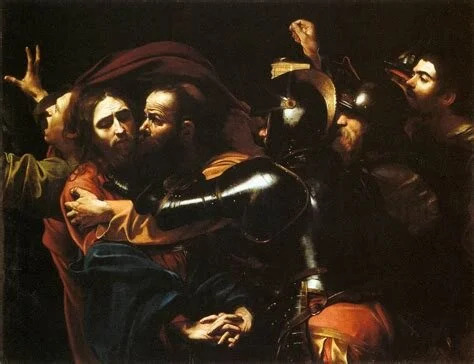
Look patiently at this painting from Caravaggio (The Taking of Christ, 1602). Where do your eyes go? Mine are drawn to Jesus’ hands, folded tightly yet somehow peacefully, his fingers interlocked and illuminated by an alien light. Notice how hands are prominent all over this painting - clutching, reaching, telling the story. This piece talks with its hands.
The central word in the story of Jesus’ arrest is “handed over” (paradidōmi). It was Judas, of course, the one in the painting with hollow eyes and a hand hooking Jesus closer for the infamous kiss (Mark 14:10). Some translations say, “betrayed,” but the Greek literally reads he was “handed over” or “delivered by.” The word is used not only to describe what Judas did in his betrayal, but also what the heavenly Father did in his generous mercy in Romans 8:32:
“He who did not spare his own Son, but paradidōmi for us all, how will he not also with him graciously give us all things?”
The larger balance of Jesus’ life on earth is filled with what he is doing — teaching, touching, healing, traveling, retreating. But after being handed over, the story is about what is done to him, over which he exerts no control.
He is arrested, abandoned, denied, and accused. He is dragged around from one corrupt official to another. Tried unjustly. Punched mockingly. Stripped. Crowned with cruel thorns. His hands and feet are hammered through with nails and pinned to wood like heavy leather hung to dry in a tannery.
As Henri Nouwen says, “That is the meaning of his Passion — being the recipient of other people’s initiatives.”
Jesus was putting the choice before the people of Jerusalem: “Will you be my disciples or my executioners?” He puts the choice before each one and before them collectively. Before human government. Before religion. Before culture. The Passion means Jesus is suffering the agony of waiting to see how they would respond to the question. Yet he knows already, even as he descends the Mount of Olives sobbing. Only the unthinkable could change the outcome — an active refusal to give himself away to the Father. To humanity. To love.
This week we are executioners. And at the same time, we are disciples because we know we are his executioners. We are in the waiting with him, knowing how the story plays out but letting it have its full weight upon our otherwise fickle and forgetful hearts, bloated with a selfishness we struggle to detect.
Our sins — past, present and future — are the nails hammered through his giving hands.
These were not clinched fists forced and held open for the hammering.
They are handed over.
Hands willingly opened.
The Collect for Holy Monday
Almighty God, whose most dear Son went not up to joy but first he suffered pain, and entered not into glory before he was crucified: Mercifully grant that we, walking in the way of the Cross, may find it none other than the way of life and peace; through Jesus Christ our Lord, who lives and reigns with you and the Holy Spirit, one God, for ever and ever. Amen.
Lent Day 40
by Jacob Rogers
Mark 14:66-72
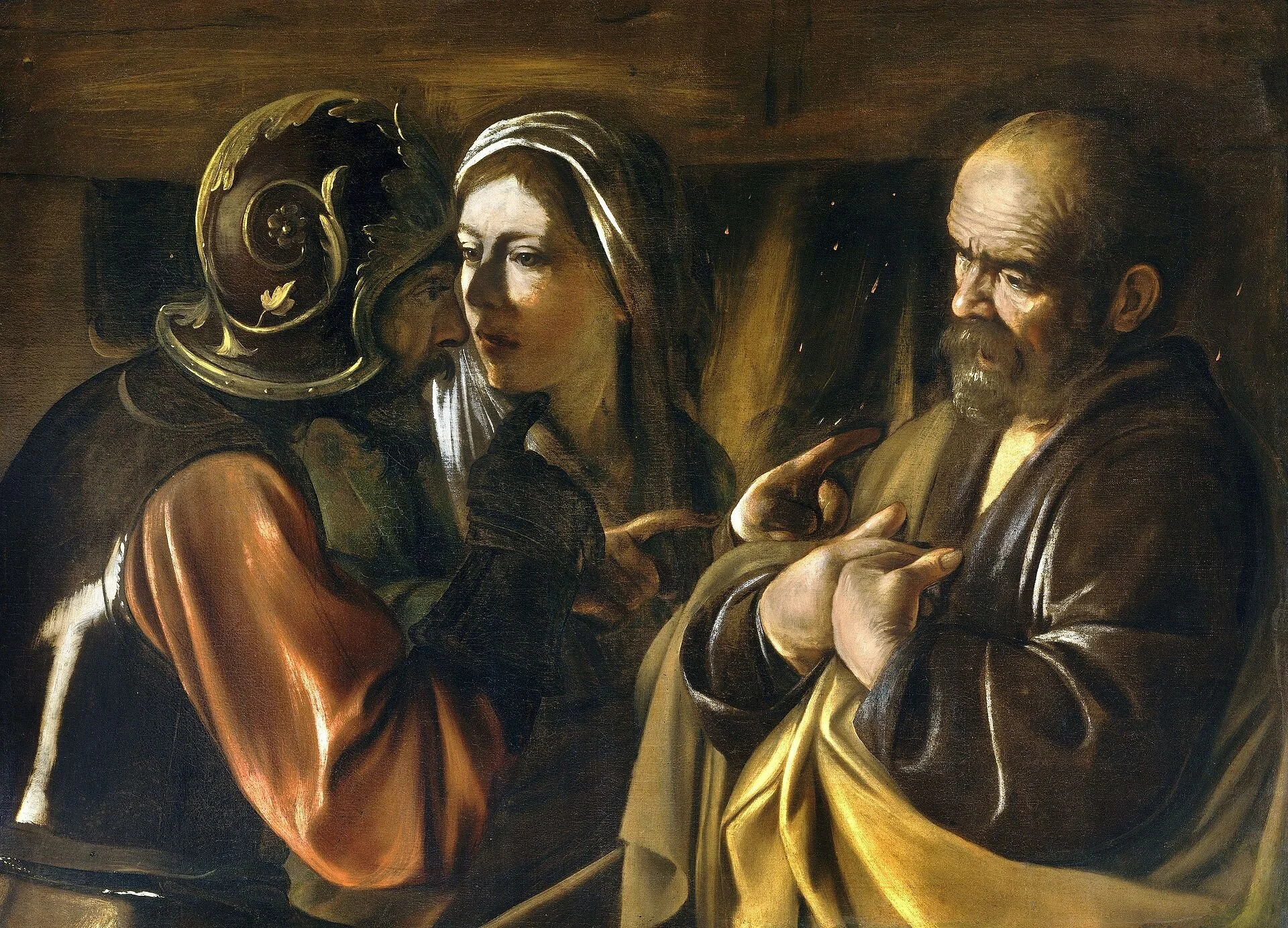
And as Peter was below in the courtyard, one of the servant girls of the high priest came, and seeing Peter warming himself, she looked at him and said, “You also were with the Nazarene, Jesus.” But he denied it, saying, “I neither know nor understand what you mean.” And he went out into the gateway and the rooster crowed. And the servant girl saw him and began again to say to the bystanders, “This man is one of them.” But again he denied it. And after a little while the bystanders again said to Peter, “Certainly you are one of them, for you are a Galilean.” But he began to invoke a curse on himself and to swear, “I do not know this man of whom you speak.” And immediately the rooster crowed a second time. And Peter remembered how Jesus had said to him, “Before the rooster crows twice, you will deny me three times.” And he broke down and wept.

You know what? I’m scared. I feel like everything is out of control: school, family, work, politics, the media. I look at all of my responsibilities, where I have very little margin for error, and I just feel overwhelmed sometimes, and yet I make mistakes and make things worse.
It’s possible you feel this way too. Maybe it feels like literally everything is collapsing around you. Your work is insane. Your family is too much. You and your spouse have been irritated with one another. Finances are shaky. Even your own body is in mutiny, and you are hurting and exhausted. Everything you do just seems to be a mistake, and you’re scared it’s all going to blow up.
I wonder if Peter felt this way when Jesus, the man he had given up everything for, was suddenly taken from him in the middle of the night. What kind of terror must have seized him when an armed crowd marched up with one of his own friends leading the way. It’s not hard to imagine what might have gone through his head:
“Wait, is Judas with these guys? Are they trying to take Jesus away? No, No, NO!” As instinct kicked in, he attacked. Apparently this was a mistake, however. Jesus already knew this would happen and went without a fight.
So what does Peter do? Stop and pray? Turn on Hillsong? Ummm... no. First he runs... scared. Then, getting to a safe distance, he follows the crowd into town, and with Jesus on trial, he messes up again... repeatedly.
Girl: “Wait, aren’t you with the Nazarene?”
Peter: “I have no idea what you’re talking about.”
Girl: “Didn’t y’all see him with Jesus?”
Peter: “You really have me confused with someone else.”.
Another: “Oh come on! You were with him! You’re from Galilee!”
Peter: “I swear! I have never met this man!”
Peter is scared, and he lies. So is it over? Does he just get rejected, his life falling to pieces? No. He remembers that Jesus already knew this would happen. He remembers and weeps. But they were tears of healing. Tears of repentance. Tears of reconciliation. Jesus already knew, and he hadn’t given up on Peter.
So what?
Well, when we lost it and yelled the other day, Jesus already knew.
When our coworkers turned against us, Jesus already knew.
When we stopped praying, Jesus already knew.
When we messed up, repeatedly, Jesus already knew.
He has redeemed us. He is remaking us. And he hasn’t rejected us, because you know what?
He knows what we will be on the day we stand before him in glory. Perfect.
Hey guys! I’m Jacob Rogers. My wife, April, and our daughters, Zoe & Lydia, and I have been a part of the Village family since 2017. You don’t see us right now because we are in Wisconsin where I am a first year seminary student at Nashotah House Theological Seminary. I am a Postulant for Holy Orders with the Jurisdiction of Armed Forced and Chaplaincy. My prayer is to one day be pastoring in a local church as well as serving as a chaplain in the Army National Guard. If you want to be added to our quarterly news letter, feel free to email me at jacobrogers07@gmail.com.

Lent Day 39
by Rachel Palm
Hebrews 4:14-5:10
Therefore, since we have a great high priest who has ascended into heaven, Jesus the Son of God, let us hold firmly to the faith we profess. For we do not have a high priest who is unable to empathize with our weaknesses, but we have one who has been tempted in every way, just as we are—yet he did not sin. Let us then approach God’s throne of grace with confidence, so that we may receive mercy and find grace to help us in our time of need.
Every high priest is selected from among the people and is appointed to represent the people in matters related to God, to offer gifts and sacrifices for sins. He is able to deal gently with those who are ignorant and are going astray, since he himself is subject to weakness. This is why he has to offer sacrifices for his own sins, as well as for the sins of the people. And no one takes this honor on himself, but he receives it when called by God, just as Aaron was.
In the same way, Christ did not take on himself the glory of becoming a high priest. But God said to him,
“You are my Son;
today I have become your Father.”
And he says in another place,
“You are a priest forever,
in the order of Melchizedek.”
During the days of Jesus’ life on earth, he offered up prayers and petitions with fervent cries and tears to the one who could save him from death, and he was heard because of his reverent submission. Son though he was, he learned obedience from what he suffered and, once made perfect, he became the source of eternal salvation for all who obey him and was designated by God to be high priest in the order of Melchizedek.

I ran out of words this year.
We all did. The ones we did use became a sort of white noise, a never ending backdrop of “COVID”, “overwhelming”, “social unrest”, “exhausted”, and “sick”.
I ran out of words as children in my piano studio came in week after week, upset because they still couldn’t take their masks off, sad they still couldn’t see their friends, and frustrated they still didn’t know when all of this would be over. I ran out of words, even opinions, as people argued and ranted over their political differences. I ran out of words when a family friend was diagnosed with COVID and then died in an overflowing Brazilian hospital, leaving twelve children and a loving wife.
There were words, of course, sitting stoppered in my throat. I couldn’t bring myself to say them.
I don’t understand. This is all wrong. Everything is over.
The words may stay there, stuck, but my Advocate knows. It is His heart to speak for me, especially when I cannot. It is His desire to speak the words that I struggle to say because He truly empathizes with my weakness, my doubt, and my fear. As my Priest, He goes before me to pray on my behalf with fervency, that I may enter with confidence.
When I have run out of words, He has not. His compassion, His comfort, and His kindness support each of us in our time of need. To be wordless is to admit our need for Him, and this is a gift. For when we are wordless, He speaks His Word over us, “In this world, you will have trouble. But take heart! I have overcome the world.”
And He gives us these words, this Word, that we might not only take for ourselves, but also give to one another. For as much as we have all run out of words and thoughts, our brothers and sisters near and far have felt and experienced the same. Let us not let a day go by that we do not take them and their burdens to the Cross along with our own. For our High Priest is ready and able to listen, pray for us, and speak His Word over us.
Word
by Madeleine L’Engle
I, who live by words, am wordless when
I try my words in prayer. All language turns
To silence. Prayer will take my words and then
Reveal their emptiness. The stilled voice learns
To hold its peace, to listen with the heart
To silence that is joy, is adoration.
The self is shattered, all words torn apart
In this strange patterned time of contemplation
That, in time, breaks time, breaks words, breaks me,
And then, in silence, leaves me healed and mended.
I leave, returned to language, for I see
Through words, even when all words are ended.
I, who live by words, am wordless when
I turn me to the Word to pray. Amen.
Rachel Palm is a piano teacher and blogger living in Greenville, SC. She writes stories and book reviews at https://allthingsfindinghopeinillness.blog/. She is so thankful for every single person who worked to make the Lent Project a reality. She loves seeing words, music, and art nourish the people of God. When she isn’t playing the piano, she enjoys finding a trail to hike with her friends, writing fantasy stories, or drinking a lot of tea.

Lent Day 38
by Lauren Evans
Psalm 51
Have mercy on me, O God, according to your unfailing love; according to your great compassion blot out my transgressions.
Wash away all my iniquity and cleanse me from my sin.
For I know my transgressions, and my sin is always before me.
Against you, you only, have I sinned and done what is evil in your sight; so you are right in your verdict and justified when you judge.
Surely I was sinful at birth, sinful from the time my mother conceived me.
Yet you desired faithfulness even in the womb; you taught me wisdom in that secret place.
Cleanse me with hyssop, and I will be clean; wash me, and I will be whiter than snow.
Let me hear joy and gladness; let the bones you have crushed rejoice.
Hide your face from my sins and blot out all my iniquity.
Create in me a pure heart, O God, and renew a steadfast spirit within me.
Do not cast me from your presence or take your Holy Spirit from me.
Restore to me the joy of your salvation and grant me a willing spirit, to sustain me.
Then I will teach transgressors your ways, so that sinners will turn back to you.
Deliver me from the guilt of bloodshed, O God, you who are God my Savior, and my tongue will sing of your righteousness.
Open my lips, Lord, and my mouth will declare your praise.
You do not delight in sacrifice, or I would bring it; you do not take pleasure in burnt offerings.
My sacrifice, O God, is a broken spirit; a broken and contrite heart you, God, will not despise.
May it please you to prosper Zion, to build up the walls of Jerusalem.
Then you will delight in the sacrifices of the righteous, in burnt offerings offered whole; then bulls will be offered on your altar.
Hebrews 4:16, Let us then approach God’s throne of grace with confidence, so that we may receive mercy and find grace to help us in our time of need.

Turn your eyes upon Jesus,
Look full in His wonderful face
And the things of earth will grow strangely dim
In the light of His glory and grace.
Tucked away within the frame of this familiar song we can find, as Thomas Chalmers puts it, “the expulsive power of a new affection.” So often in both our pursuit and stumbling to follow faithfully after Jesus we fail to see how godliness can actually be a delight instead of a drudgery.
Turn your eyes upon Jesus
In Psalm 51, David clearly sees that what he needs is not more willpower to stop committing sexual sins, but instead a complete reorientation of his affections and misplaced joy.
“For I know my transgressions, and my sin is ever before me. Against you, you only, have I sinned and done what is evil in your sight....Let me hear joy and gladness; let the bones that you have broken rejoice.” (Psalm 51:3-4,8)
Look full in His wonderful face
Yet when the weight of our sins in the presence of a holy God causes us to prostrate before him we need not stay there. For we can have our drooping heads lifted to look up unto Jesus who has become our righteousness.
And then once our hearts have been postured rightly and our minds have grasped this undeserved and free gift that is the gospel, all of our backward thinking turns aright. The thinking that we have to work hard enough for him. Or the opposing thought that has us assuming we’re righteous enough on our own. And there in that place of beholding instead of striving, our affections that used to serve us have now been refined to serve Him. “The one party rejoicing over the other to do him good - the other finding that the truest gladness of his heart lies in the impulse of a gratitude, by which it is awakened to the charms of a new moral existence.” (T. Chalmers)
“Create in me a clean heart, O God, and renew a right spirit within me...Restore unto me the joy of your salvation, and uphold me with a willing spirit.” (Psalm 51: 10,12)
And the things of earth
Or our lesser affections...
Or the weight of all our shame...
Or the fear to approach Him...
Or the battle with unfaithfulness…
Or the lure of self help...
Will grow strangely dim
When we move forward on this pilgrimage beholding our risen Lord, all lesser desires begin to drop off like dead leaves. Not from our personal efforts of righteousness and willpower. But by the joy set before us and the satisfying portion that He is for what our hearts truly long.
“Let us then with confidence draw near to the throne of grace, that we may receive mercy and find grace to help in time of need.” (Hebrews 4:16)
In the light of His glory and grace.
Lauren is a home educating mother to three daughters. She tries to always be a seeker of light and beauty, is occasionally a cloth doll maker on Etsy (www.topknottwirl.etsy.com) and is an every now and then blogger when she is disciplined enough (www.asweetrepose.com). While she’s thankful to use her heart and hands, at the end of the day she’s most proud when she can look her kids in the eyes and laugh like she really means it.
Lauren Recommends:
Thomas Chalmer’s sermon on the expulsive power of a new affection:
A video on doxology: https://www.youtube.com/watch?v=QbrTK5c7s9c

Lent Day 37
by Rachel Roller
Lent is a season of repentance, a time when we look back and confess our sins. But it is also a season of hope, when we look forward to the promise of Easter’s redemption. Today’s readings perfectly encapsulate this Lenten tension between repentance and redemption, penance and promise, heart-searching and hope.
“Have mercy on me, O God,” David prays at the beginning of today’s psalm, “according to your great compassion, blot out my transgressions” (Ps 51:1-2). As if in answer, God speaks through the prophet Jeremiah: “I will forgive their wickedness, and remember their sins no more” (Jer 31:34).
Again, David prays, “Teach me wisdom in the inmost place...Create in me a clean heart, O God, and renew a steadfast spirit within me” (Ps 51:6, 10). And again, God answers, “I will put my law in their minds and write it on their hearts” (Jer 31:33).
“Do not cast me from your presence or take your Holy Spirit from me,” David pleads (Ps 51:11), and God promises, “I will be their God, and they will be my people...all of them will know me, from the least of them to the greatest” (Jer 31:33, 34).
Through this dialogue between the psalm and the prophet, we see that God stands ready to forgive, restore, and renew us when we confess our sin and seek God’s presence. The letter to the Hebrews takes the promise even further—because Jesus understands our weakness and temptation, we can “approach God’s throne of grace with confidence, so that we may receive mercy and find grace to help us in our time of need” (Heb 4:15-16).
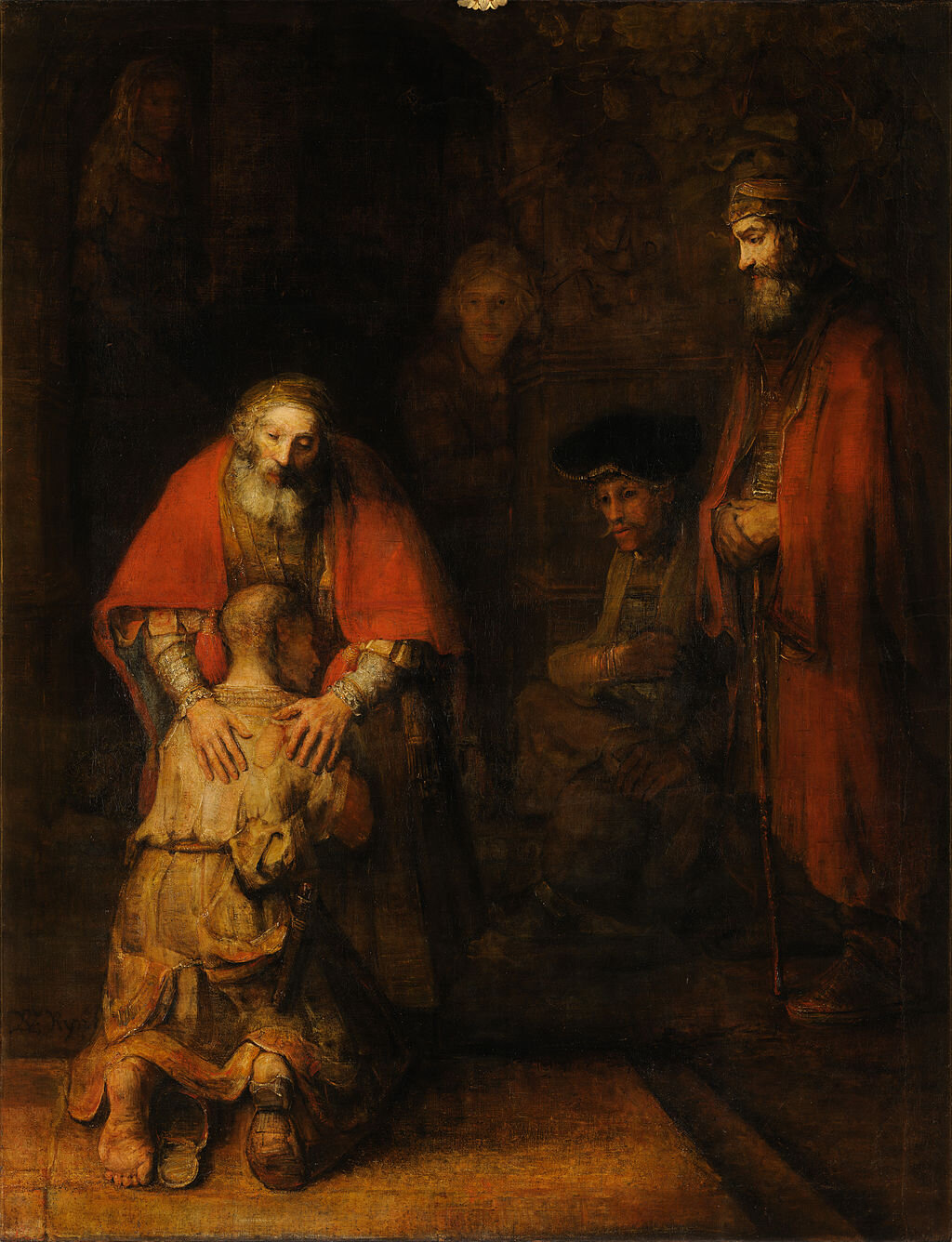
In this season of Lent, let us turn from sin and turn to God, confident in the promise of his mercy, knowing that like the father of the prodigal, God will welcome us home.
God of justice and of mercy
Christ who conquered every sin
Cleanse us, Lord, and make us holy
Breathe upon our hearts again
Turn this stone to new-born flesh
Salvation’s joyful song restore
Write your law in us afresh
That we may know you more and more
Rachel Roller is an analytical chemistry graduate student at the University of Notre Dame. When she’s not in the lab, she enjoys reading, writing, playing her violin, studying the works of C. S. Lewis, going on long walks, and drinking copious amounts of Earl Grey.

Lent Day 36
by Christina Davison
Jeremiah 31:31-34, “The days are coming,” declares the LORD, “when I will make a new covenant with the people of Israel and with the people of Judah. It will not be like the covenant I made with their ancestors when I took them by the hand to lead them out of Egypt, because they broke my covenant, though I was a husband to them, ” declares the LORD. “This is the covenant I will make with the people of Israel after that time,” declares the LORD. “I will put my law in their minds and write it on their hearts. I will be their God, and they will be my people. No longer will they teach their neighbor, or say to one another, ‘Know the LORD,’ because they will all know me, from the least of them to the greatest,” declares the LORD. “For I will forgive their wickedness and will remember their sins no more.”
Psalm 51
Have mercy on me, O God, according to your unfailing love; according to your great compassion blot out my transgressions.
Wash away all my iniquity and cleanse me from my sin.
For I know my transgressions, and my sin is always before me.
Against you, you only, have I sinned and done what is evil in your sight; so you are right in your verdict and justified when you judge.
Surely I was sinful at birth, sinful from the time my mother conceived me.
Yet you desired faithfulness even in the womb; you taught me wisdom in that secret place.
Cleanse me with hyssop, and I will be clean; wash me, and I will be whiter than snow.
Let me hear joy and gladness; let the bones you have crushed rejoice.
Hide your face from my sins and blot out all my iniquity.
Create in me a pure heart, O God, and renew a steadfast spirit within me.
Do not cast me from your presence or take your Holy Spirit from me.
Restore to me the joy of your salvation and grant me a willing spirit, to sustain me.
Then I will teach transgressors your ways, so that sinners will turn back to you.
Deliver me from the guilt of bloodshed, O God, you who are God my Savior, and my tongue will sing of your righteousness.
Open my lips, Lord, and my mouth will declare your praise.
You do not delight in sacrifice, or I would bring it; you do not take pleasure in burnt offerings.
My sacrifice, O God, is a broken spirit; a broken and contrite heart you, God, will not despise.
May it please you to prosper Zion, to build up the walls of Jerusalem.
Then you will delight in the sacrifices of the righteous, in burnt offerings offered whole; then bulls will be offered on your altar.
Hebrews 4:14- 5:10, Therefore, since we have a great high priest who has ascended into heaven, Jesus the Son of God, let us hold firmly to the faith we profess. For we do not have a high priest who is unable to empathize with our weaknesses, but we have one who has been tempted in every way, just as we are—yet he did not sin. Let us then approach God’s throne of grace with confidence, so that we may receive mercy and find grace to help us in our time of need.
Every high priest is selected from among the people and is appointed to represent the people in matters related to God, to offer gifts and sacrifices for sins. He is able to deal gently with those who are ignorant and are going astray, since he himself is subject to weakness. This is why he has to offer sacrifices for his own sins, as well as for the sins of the people. And no one takes this honor on himself, but he receives it when called by God, just as Aaron was.
In the same way, Christ did not take on himself the glory of becoming a high priest. But God said to him,
“You are my Son;
today I have become your Father.”
And he says in another place,
“You are a priest forever,
in the order of Melchizedek.”
During the days of Jesus’ life on earth, he offered up prayers and petitions with fervent cries and tears to the one who could save him from death, and he was heard because of his reverent submission. Son though he was, he learned obedience from what he suffered and, once made perfect, he became the source of eternal salvation for all who obey him and was designated by God to be high priest in the order of Melchizedek.
John 12:20-36
Now there were some Greeks among those who went up to worship at the festival. They came to Philip, who was from Bethsaida in Galilee, with a request. “Sir,” they said, “we would like to see Jesus.” Philip went to tell Andrew; Andrew and Philip in turn told Jesus.
Jesus replied, “The hour has come for the Son of Man to be glorified. Very truly I tell you, unless a kernel of wheat falls to the ground and dies, it remains only a single seed. But if it dies, it produces many seeds. Anyone who loves their life will lose it, while anyone who hates their life in this world will keep it for eternal life. Whoever serves me must follow me; and where I am, my servant also will be. My Father will honor the one who serves me.
“Now my soul is troubled, and what shall I say? ‘Father, save me from this hour’? No, it was for this very reason I came to this hour. Father, glorify your name!”
Then a voice came from heaven, “I have glorified it, and will glorify it again.” The crowd that was there and heard it said it had thundered; others said an angel had spoken to him.
Jesus said, “This voice was for your benefit, not mine. Now is the time for judgment on this world; now the prince of this world will be driven out. And I, when I am lifted up from the earth, will draw all people to myself.” He said this to show the kind of death he was going to die.
The crowd spoke up, “We have heard from the Law that the Messiah will remain forever, so how can you say, ‘The Son of Man must be lifted up’? Who is this ‘Son of Man’?”
Then Jesus told them, “You are going to have the light just a little while longer. Walk while you have the light, before darkness overtakes you. Whoever walks in the dark does not know where they are going. Believe in the light while you have the light, so that you may become children of light.” When he had finished speaking, Jesus left and hid himself from them.

As we walk through the season of Lent, we are encouraged to focus on penitence, praying to the Lord for open eyes to see our sin and open hearts to confess, repent, and receive his great forgiveness. Psalm 51, the great song of contrition, has been set to music hundreds of times, particularly in Latin as the Miserere. In this Psalm, we see a stark contrast between God’s character and our own: we desperately need to be washed and purified, but he is pure and holy. He is complete and self-fulfilled, but we need him to fulfill us and give us joy. His judgment on our sin is just, yet he is full of compassion and unfailing love. We also see the beautiful contradiction that when we mourn because of our sins and come to him with a broken heart, he will restore us and fill us with unparalleled joy.
The Lord told Jeremiah that he would make a new covenant with his people, one that would not rely on stone tablets and scrolls that can be damaged or lost, but would enflesh his instructions, making it possible for everyone to know the Lord and experience his forgiveness. In Jesus, the Word became flesh, and John records in his Gospel account that Jesus told the crowd that when he was lifted up he would “draw everyone to [him]self.”
When the time for judging the world arrived, Jesus displayed God’s full just judgment and his amazing mercy through his death and resurrection. He became our Great High Priest, one who took on flesh and understands our every weakness, and lived the perfect life we could not. How can we fear to bring our confession to such a Priest? He has been telling us for centuries that he loves a broken and contrite heart and that when we come to him with our neediness, we will receive his mercy and grace. So as we search our hearts and ask him to do the same during this season, we can “come boldly to the throne of grace,” knowing that it is this same gracious, merciful, and forgiving savior who will greet us. The covenant has changed,
Christina is a violinist, singer, and composer serving as a missionary in central Tokyo. She and her husband, Jonas, spend their time studying the Japanese language and culture, developing worship resources for Japanese churches, discipling Christians and artists, and raising their three children.

Lent Day 35
by Missy Kemp
Psalm 51
Have mercy on me, O God, according to your unfailing love; according to your great compassion blot out my transgressions.
Wash away all my iniquity and cleanse me from my sin.
For I know my transgressions, and my sin is always before me.
Against you, you only, have I sinned and done what is evil in your sight; so you are right in your verdict and justified when you judge.
Surely I was sinful at birth, sinful from the time my mother conceived me.
Yet you desired faithfulness even in the womb; you taught me wisdom in that secret place.
Cleanse me with hyssop, and I will be clean; wash me, and I will be whiter than snow.
Let me hear joy and gladness; let the bones you have crushed rejoice.
Hide your face from my sins and blot out all my iniquity.
Create in me a pure heart, O God, and renew a steadfast spirit within me.
Do not cast me from your presence or take your Holy Spirit from me.
Restore to me the joy of your salvation and grant me a willing spirit, to sustain me.
Then I will teach transgressors your ways, so that sinners will turn back to you.
Deliver me from the guilt of bloodshed, O God, you who are God my Savior, and my tongue will sing of your righteousness.
Open my lips, Lord, and my mouth will declare your praise.
You do not delight in sacrifice, or I would bring it; you do not take pleasure in burnt offerings.
My sacrifice, O God, is a broken spirit; a broken and contrite heart you, God, will not despise.
May it please you to prosper Zion, to build up the walls of Jerusalem.
Then you will delight in the sacrifices of the righteous, in burnt offerings offered whole; then bulls will be offered on your altar.

Inspired By Psalm 51
Sundown on Sabbath and I’m already reaching
Busy hands and pen for planning
Into the untracked field of the week to come.
I stand from my pious posture,
Ignore a gnawing knowing from my core
And chart a course for my own salvation.
Monday midday always finds me collapsing fast,
Lost within my cracking capable veneer,
And You, ever telling me I can bare my heart,
And in Your Hands it becomes bathed and bright.
My mouth is washed of ashes, sluiced with singing.
I’m rising, shattered bones restored for praise.
Over and over I wind this path,
Circles of pride and doubt and stumbling,
Humbling, longing and love.
Always you welcome me back to the end
Of myself and the birthing
Of the woman You’re making of me.
Missy Kemp is a wife and mother, living in Travelers Rest. She finds expression in photography, poetry, and gardening.
Lent Day 34
by Chuck Romig
Jeremiah 31:31-34
“Behold, the days are coming, declares the Lord, when I will make a new covenant with the house of Israel and the house of Judah, not like the covenant that I made with their fathers on the day when I took them by the hand to bring them out of the land of Egypt, my covenant that they broke, though I was their husband, declares the Lord. For this is the covenant that I will make with the house of Israel after those days, declares the Lord: I will put my law within them, and I will write it on their hearts. And I will be their God, and they shall be my people. And no longer shall each one teach his neighbor and each his brother, saying, ‘Know the Lord,’ for they shall all know me, from the least of them to the greatest, declares the Lord. For I will forgive their iniquity, and I will remember their sin no more.”
Psalm 51
Have mercy on me, O God,
according to your steadfast love;
according to your abundant mercy
blot out my transgressions.
Wash me thoroughly from my iniquity,
and cleanse me from my sin!
For I know my transgressions,
and my sin is ever before me.
Against you, you only, have I sinned
and done what is evil in your sight,
so that you may be justified in your words
and blameless in your judgment.
Behold, I was brought forth in iniquity,
and in sin did my mother conceive me.
Behold, you delight in truth in the inward being,
and you teach me wisdom in the secret heart.
Purge me with hyssop, and I shall be clean;
wash me, and I shall be whiter than snow.
Let me hear joy and gladness;
let the bones that you have broken rejoice.
Hide your face from my sins,
and blot out all my iniquities.
Create in me a clean heart, O God,
and renew a right spirit within me.
Cast me not away from your presence,
and take not your Holy Spirit from me.
Restore to me the joy of your salvation,
and uphold me with a willing spirit.
Then I will teach transgressors your ways,
and sinners will return to you.
Deliver me from blood guiltiness, O God,
O God of my salvation,
and my tongue will sing aloud of your righteousness.
O Lord, open my lips,
and my mouth will declare your praise.
For you will not delight in sacrifice, or I would give it;
you will not be pleased with a burnt offering.
The sacrifices of God are a broken spirit;
a broken and contrite heart, O God, you will not despise.
Do good to Zion in your good pleasure;
build up the walls of Jerusalem;
then will you delight in right sacrifices,
in burnt offerings and whole burnt offerings;
then bulls will be offered on your altar.

I recently retired after spending 35 years as a full-time professor of counselor education, during which time I trained mental health professionals. I have been fascinated with psychology my entire adult life, marveling at the complexities of a creature made in God’s image, who, as a finite being, can have a personal relationship with our infinite Creator. A couple of perplexing questions that I have pondered my entire career are: how do you make changes in order to improve your health and well-being, and what is the source of strength needed to make those changes? The texts for today provide a profound understanding of the change process.
The passage in Jeremiah 31 speaks of God initiating a new covenant with his people. An integral part of that new covenant is that God will write His law on the hearts of His people. Further, God will forgive their sins, be known to all in a very personal way, and restore a right relationship with them. Something is going to be very different as the law will be internalized in a way that had not previously occurred. Simple knowledge of the law was insufficient to produce the holy living that God desired in His people.
Psalm 51 furthers this concept of changing the heart. David clearly knows he has sinned and cries out to God for mercy. He requests that God create in him a clean heart and renew a right spirit (vs. 10). He asks that God teach him wisdom in his “secret heart” (vs. 6).
“Changing the heart” is language often used by Christian mental health professionals, and usually connotes changing something deep within the person. Biblically, the heart is considered the center of the person and includes one’s core thoughts and thinking processes, emotions, moral character, and the decision-making part of the person (will). In Psalm 51, David cries out for change in all these elements of his personhood. With enough commitment, will power, and support, we can make substantive changes in our lives. However, to really change at the level of the heart, we have insufficient power. David knows this, so he appeals to God to create in him a clean heart, restore the joy of salvation into his life, and renew a right relationship with the holy and righteous Creator. Most importantly, he recognizes his sin creates the very barrier to making these changes.
During this season of Lent, we would do well to reflect on the parts of our lives that still need the cleansing and renewing power of God, and, like David, cry out to our merciful God to change us.
Chuck Romig just retired after serving 23 years at Wichita State University and 12 years at John Brown University as a professor of counselor education. His specialty was working with young children and their families, particularly using play therapy. Chuck has loved studying psychology, being fascinated with the complexities of human beings created in God’s image. He and his amazing wife, Kim, have been married for 43 years, where the “for betters” of their wedding vows have far outweighed the “for worses” because of the richness of the blessings God has brought into their lives. They have two wonderful sons married to fantastic daughters-in-law, and have five delightful grandchildren. They are now figuring out how to live for the Kingdom as retirees, having relocated to the Dallas area to be close to family.

Lent Day 33
by Jason Bursch
Jeremiah 31:31-34, “The days are coming,” declares the LORD, “when I will make a new covenant with the people of Israel and with the people of Judah. It will not be like the covenant I made with their ancestors when I took them by the hand to lead them out of Egypt, because they broke my covenant, though I was a husband to them, ” declares the LORD. “This is the covenant I will make with the people of Israel after that time,” declares the LORD. “I will put my law in their minds and write it on their hearts. I will be their God, and they will be my people. No longer will they teach their neighbor, or say to one another, ‘Know the LORD,’ because they will all know me, from the least of them to the greatest,” declares the LORD. “For I will forgive their wickedness and will remember their sins no more.”
Psalm 51
Have mercy on me, O God, according to your unfailing love; according to your great compassion blot out my transgressions.
Wash away all my iniquity and cleanse me from my sin.
For I know my transgressions, and my sin is always before me.
Against you, you only, have I sinned and done what is evil in your sight; so you are right in your verdict and justified when you judge.
Surely I was sinful at birth, sinful from the time my mother conceived me.
Yet you desired faithfulness even in the womb; you taught me wisdom in that secret place.
Cleanse me with hyssop, and I will be clean; wash me, and I will be whiter than snow.
Let me hear joy and gladness; let the bones you have crushed rejoice.
Hide your face from my sins and blot out all my iniquity.
Create in me a pure heart, O God, and renew a steadfast spirit within me.
Do not cast me from your presence or take your Holy Spirit from me.
Restore to me the joy of your salvation and grant me a willing spirit, to sustain me.
Then I will teach transgressors your ways, so that sinners will turn back to you.
Deliver me from the guilt of bloodshed, O God, you who are God my Savior, and my tongue will sing of your righteousness.
Open my lips, Lord, and my mouth will declare your praise.
You do not delight in sacrifice, or I would bring it; you do not take pleasure in burnt offerings.
My sacrifice, O God, is a broken spirit; a broken and contrite heart you, God, will not despise.
May it please you to prosper Zion, to build up the walls of Jerusalem.
Then you will delight in the sacrifices of the righteous, in burnt offerings offered whole; then bulls will be offered on your altar.
Hebrews 4:14- 5:10, Therefore, since we have a great high priest who has ascended into heaven, Jesus the Son of God, let us hold firmly to the faith we profess. For we do not have a high priest who is unable to empathize with our weaknesses, but we have one who has been tempted in every way, just as we are—yet he did not sin. Let us then approach God’s throne of grace with confidence, so that we may receive mercy and find grace to help us in our time of need.
Every high priest is selected from among the people and is appointed to represent the people in matters related to God, to offer gifts and sacrifices for sins. He is able to deal gently with those who are ignorant and are going astray, since he himself is subject to weakness. This is why he has to offer sacrifices for his own sins, as well as for the sins of the people. And no one takes this honor on himself, but he receives it when called by God, just as Aaron was.
In the same way, Christ did not take on himself the glory of becoming a high priest. But God said to him,
“You are my Son;
today I have become your Father.”
And he says in another place,
“You are a priest forever,
in the order of Melchizedek.”
During the days of Jesus’ life on earth, he offered up prayers and petitions with fervent cries and tears to the one who could save him from death, and he was heard because of his reverent submission. Son though he was, he learned obedience from what he suffered and, once made perfect, he became the source of eternal salvation for all who obey him and was designated by God to be high priest in the order of Melchizedek.
John 12:20-36
Now there were some Greeks among those who went up to worship at the festival. They came to Philip, who was from Bethsaida in Galilee, with a request. “Sir,” they said, “we would like to see Jesus.” Philip went to tell Andrew; Andrew and Philip in turn told Jesus.
Jesus replied, “The hour has come for the Son of Man to be glorified. Very truly I tell you, unless a kernel of wheat falls to the ground and dies, it remains only a single seed. But if it dies, it produces many seeds. Anyone who loves their life will lose it, while anyone who hates their life in this world will keep it for eternal life. Whoever serves me must follow me; and where I am, my servant also will be. My Father will honor the one who serves me.
“Now my soul is troubled, and what shall I say? ‘Father, save me from this hour’? No, it was for this very reason I came to this hour. Father, glorify your name!”
Then a voice came from heaven, “I have glorified it, and will glorify it again.” The crowd that was there and heard it said it had thundered; others said an angel had spoken to him.
Jesus said, “This voice was for your benefit, not mine. Now is the time for judgment on this world; now the prince of this world will be driven out. And I, when I am lifted up from the earth, will draw all people to myself.” He said this to show the kind of death he was going to die.
The crowd spoke up, “We have heard from the Law that the Messiah will remain forever, so how can you say, ‘The Son of Man must be lifted up’? Who is this ‘Son of Man’?”
Then Jesus told them, “You are going to have the light just a little while longer. Walk while you have the light, before darkness overtakes you. Whoever walks in the dark does not know where they are going. Believe in the light while you have the light, so that you may become children of light.” When he had finished speaking, Jesus left and hid himself from them.

This set of scriptures give us an amazing focal point centered on Christ’s sacrifice and the forgiveness of our sins. As I ponder these passages I’m drawn to one particular sentence found in Hebrews 5 verse 7. It says: “In the days of his flesh, Jesus offered up prayers and supplications, with loud cries and tears, to the one who was able to save him from death, and he was heard because of his reverent submission.”
It’s striking to hear that the Lord Christ was in such admitted agony and angst in his humanity. It’s also comforting to remember he truly knows our weakness. Weeping and loud cries rose from our Savior’s lips. Here we know he struggled, wavered, felt the weight of despair, hopelessness, fear, destruction, and insecurity. He saw the punishing horizon just before him and cried out and wept to the Father. For some reason I normally think of Jesus’ relationship with the Father as one of calm, settled peace and surety, with a faith that never pauses under pressure. But this is an encouragement and deeply resonates with our human experience in this sin marred world. His prayerful cries are visceral and raw and exposed. He’s feeling the reality of our weakness. And yet there is the underlying ‘reverent submission’ always. He does not truly falter. He is fully divine. The hypostatic union is on perfect display.
In this fallen world it can feel like every single day we are forced to take small sips from the cup of suffering and despair. There is always something to knock us down off our feet over and again, whether external or internal. And we cry out in agony. Christ lovingly takes that cursed cup of sin, suffering, and death from our hands and drinks it down to the very last bitter sediment. He drinks it all so that he can offer us a shining new cup. An ever flowing cup of new life we drink from in celebration that he has overcome.
In the Dark of Night- by Jason and Joanna Bursch
Standing at this window, I see a midnight sky
Darkness all around me, crowding out my soul
A sleepless night, and I can’t breathe
Familiar peace is out of reach
Are you here? Are you next to me?
Are you near? Do you see what I see?
I’m searching out, in the shadows
For some light, for any glow
Call out my soul, in the dark of night
Will the moon rise, and bring its quiet light?
Sorrow’s swept from under me, the footing I’ve always known
Pulled away the scenery, that had been to me my home
Will I be washed away, will I be cut down?
Will I come to find it’s been me alone all along?
Are you here? Are you next to me?
Are you near? Do you see what I see?
Please calm my fears, will you tell me you care?
Don’t disappear, like the fog in the air
Call out my soul, in the dark of night
Will the moon rise, and bring its quiet light?
Jason Bursch is a worship leader living in Greenville, SC. He and his wife Joanna enjoy playing music, raising their three children, and going on adventures as a family.
Lent Day 32
by Father Patrick Malone
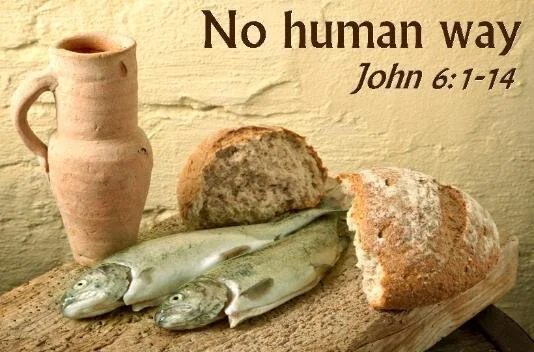
John 6:1-15
Some time after this, Jesus crossed to the far shore of the Sea of Galilee (that is, the Sea of Tiberias), and a great crowd of people followed him because they saw the signs he had performed by healing the sick. Then Jesus went up on a mountainside and sat down with his disciples. The Jewish Passover Festival was near. When Jesus looked up and saw a great crowd coming toward him, he said to Philip, “Where shall we buy bread for these people to eat?” He asked this only to test him, for he already had in mind what he was going to do. Philip answered him, “It would take more than half a year’s wages to buy enough bread for each one to have a bite!” Another of his disciples, Andrew, Simon Peter’s brother, spoke up. “Here is a boy with five small barley loaves and two small fish, but how far will they go among so many?” Jesus said, “Have the people sit down.” There was plenty of grass in that place, and they sat down (about five thousand men were there) Jesus then took the loaves, gave thanks, and distributed to those who were seated as much as they wanted. He did the same with the fish. When they had all had enough to eat, he said to his disciples, “Gather the pieces that are left over. Let nothing be wasted.” So they gathered them and filled twelve baskets with the pieces of the five barley loaves left over by those who had eaten. After the people saw the sign Jesus performed, they began to say, “Surely this is the Prophet who is to come into the world.”
Jesus, knowing that they intended to come and make him king by force, withdrew again to a mountain by himself.

So you are walking with thousands of people to hear a great new teacher. It’s late afternoon and you realize that you brought no food. What do you do? No stores, no markets, nothing to eat for dinner.
In this passage of Scripture in John 6 we see a test, a miracle, and a fulfillment of an Old Testament prophecy. As Jesus enter this region near the Sea of Tiberias he is very purposeful in what he does and says. He climbs a mountain and sits down, raises his eyes and sees a crowd. All of this is set the scene for what is to come next, The Test!
Jesus looks over to Philip and asks, “Where are we going to buy bread so these people can eat”? Jesus did this to test Philip. Was Jesus being mean? Was he to show some kind of flaw in Philip or the other disciples? No! Jesus test us to teach us who we are and who he is.
After the banter about how to acquire bread for everyone, Jesus is passed several loaves of bread and a few fish. He takes the bread and gives thanks. He does the same with the fish. Jesus taking bread and giving thanks is a major theme in this chapter and in the life of Jesus. When Jesus takes bread and gives thanks his followers eat and are fed. In chapter 6 we see that there were 5000 men and we could also image women and children being there as well. Jesus taking bread and giving thanks fed them all with 12 baskets filled with left overs. Later in this chapter Jesus teaches that He is the Bread of Life and those who come to him will never hunger and those who believe in him will never thirst.
This is the miracle! But in John these supernatural events are not called miracles, but signs. Why signs? Signs give direction and point the way. These signs in John point to the fact that Jesus is sent by God and is the Prophet of God foretold in Deut 18:18-19. There, the Lord tells Moses that He will send another prophet like Moses. And the Lord will put his Word in this prophet’s mouth. Interestingly Jesus says in John 12:49, “For I have not spoken on my own authority; the Father who sent me has himself given me commandment what to say and what to speak.” (RSV).
Jesus tests Philip to reveal who he is and that Philip and his fellow disciples are unable to care for the other followers without the aid of Jesus.
Fr. Patrick Malone is a Hospice Chaplain and Rector of Holy Cross Anglican Church in Brookfield WI. In his spare time, he makes delicious homemade cheeses. He has been married to Robin for over 30 years, has three adult children and one grandchild.