

Desmós
Stories, prayers, musings and other creative inspiration
to strengthen the BOND at Village Church.
Lent Day 31
by Laura Miller
2 Chronicles 36:14-23, Furthermore, all the leaders of the priests and the people became more and more unfaithful, following all the detestable practices of the nations and defiling the temple of the LORD, which he had consecrated in Jerusalem.
The LORD, the God of their ancestors, sent word to them through his messengers again and again, because he had pity on his people and on his dwelling place. But they mocked God’s messengers, despised his words and scoffed at his prophets until the wrath of the LORD was aroused against his people and there was no remedy. He brought up against them the king of the Babylonians, who killed their young men with the sword in the sanctuary, and did not spare young men or young women, the elderly or the infirm. God gave them all into the hands of Nebuchadnezzar. He carried to Babylon all the articles from the temple of God, both large and small, and the treasures of the LORD’s temple and the treasures of the king and his officials. They set fire to God’s temple and broke down the wall of Jerusalem; they burned all the palaces and destroyed everything of value there. He carried into exile to Babylon the remnant, who escaped from the sword, and they became servants to him and his successors until the kingdom of Persia came to power. The land enjoyed its sabbath rests; all the time of its desolation it rested, until the seventy years were completed in fulfillment of the word of the LORD spoken by Jeremiah. In the first year of Cyrus king of Persia, in order to fulfill the word of the LORD spoken by Jeremiah, the LORD moved the heart of Cyrus king of Persia to make a proclamation throughout his realm and also to put it in writing:
This is what Cyrus king of Persia says: “ ‘The LORD, the God of heaven, has given me all the kingdoms of the earth and he has appointed me to build a temple for him at Jerusalem in Judah. Any of his people among you may go up, and may the LORD their God be with them.’ ”
Psalm 122
I rejoiced with those who said to me, “Let us go to the house of the LORD.”
Our feet are standing in your gates, Jerusalem.
Jerusalem is built like a city that is closely compacted together.
That is where the tribes go up— the tribes of the LORD— to praise the name of the LORD according to the statute given to Israel.
There stand the thrones for judgment, the thrones of the house of David.
Pray for the peace of Jerusalem: “May those who love you be secure.
May there be peace within your walls and security within your citadels.”
For the sake of my family and friends, I will say, “Peace be within you.”
For the sake of the house of the LORD our God, I will seek your prosperity.
Ephesians 2:1-10, As for you, you were dead in your transgressions and sins, in which you used to live when you followed the ways of this world and of the ruler of the kingdom of the air, the spirit who is now at work in those who are disobedient. All of us also lived among them at one time, gratifying the cravings of our flesh and following its desires and thoughts. Like the rest, we were by nature deserving of wrath. But because of his great love for us, God, who is rich in mercy, made us alive with Christ even when we were dead in transgressions—it is by grace you have been saved.
And God raised us up with Christ and seated us with him in the heavenly realms in Christ Jesus, in order that in the coming ages he might show the incomparable riches of his grace, expressed in his kindness to us in Christ Jesus.For it is by grace you have been saved, through faith—and this is not from yourselves, it is the gift of God—not by works, so that no one can boast. For we are God’s handiwork, created in Christ Jesus to do good works, which God prepared in advance for us to do.
John 6:1-15 After this Jesus went away to the other side of the Sea of Galilee, which is the Sea of Tiberias. And a large crowd was following him, because they saw the signs that he was doing on the sick. Jesus went up on the mountain, and there he sat down with his disciples. Now the Passover, the feast of the Jews, was at hand. Lifting up his eyes, then, and seeing that a large crowd was coming toward him, Jesus said to Philip, “Where are we to buy bread, so that these people may eat?” He said this to test him, for he himself knew what he would do. 7 Philip answered him, “Two hundred denarii worth of bread would not be enough for each of them to get a little.” One of his disciples, Andrew, Simon Peter's brother, said to him, “There is a boy here who has five barley loaves and two fish, but what are they for so many?” Jesus said, “Have the people sit down.” Now there was much grass in the place. So the men sat down, about five thousand in number. Jesus then took the loaves, and when he had given thanks, he distributed them to those who were seated. So also the fish, as much as they wanted. And when they had eaten their fill, he told his disciples, “Gather up the leftover fragments, that nothing may be lost.” So they gathered them up and filled twelve baskets with fragments from the five barley loaves left by those who had eaten. When the people saw the sign that he had done, they said, “This is indeed the Prophet who is to come into the world!” Perceiving then that they were about to come and take him by force to make him king, Jesus withdrew again to the mountain by himself.

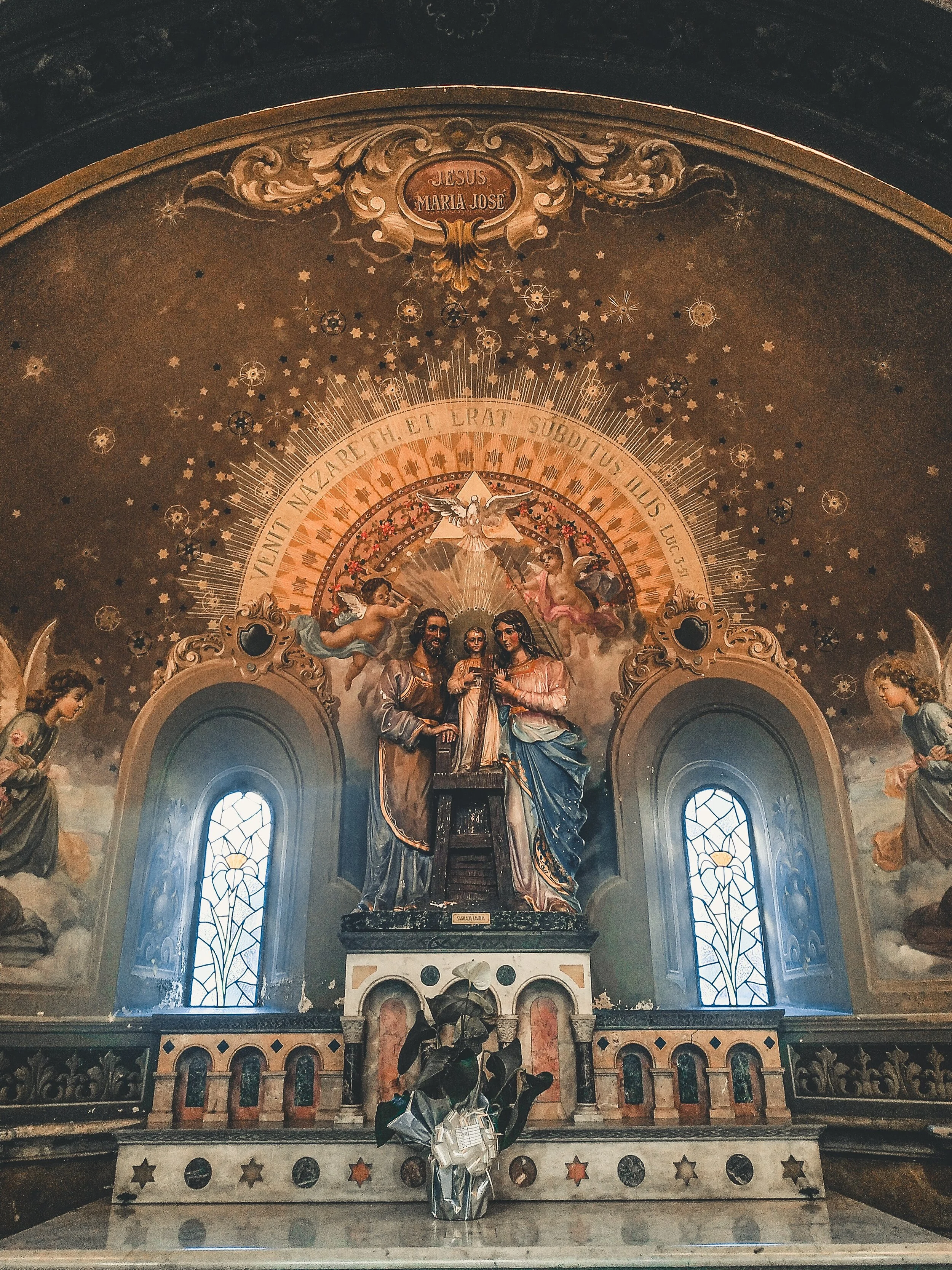
Historically, followers of God have worshiped in many places -- the desert tabernacle, the Jerusalem temple, believers’ homes, churches, fields, and cathedrals.
Today’s Old Testament readings both have to do with the temple of God in Jerusalem. At the end of Second Chronicles, the people of Israel are in exile in Babylon. The temple has been destroyed and we get a glimpse at the hope of seeing it rebuilt.
Meanwhile, Psalm 122 opens with, “I rejoiced with those who said to me, ‘Let us go to the house of the Lord.’” It then describes the tribes singing praises to God as they go up to worship at the temple in Jerusalem.
The temple gets built, destroyed, and rebuilt. The people of God grieve when they have no place to worship, and rejoice when they can enter once again into God’s presence in the glory of his temple.
Since the coming of Jesus, Christians no longer have to go up to a temple to worship. As 1 Corinthians 6:19 tells us, “Do you not know that your bodies are temples of the Holy Spirit, who is in you, whom you have received from God?” Christians themselves have become the primary dwelling of the Spirit of God.
Like the physical location of the temple of God, our hearts can also be destroyed by the effects of sin. Our bodies can suffer from want or illness. And just as the people of God mourned and rejoiced over the state of the temple of God, we should still mourn when our hearts are far from God. We should rejoice when our hearts are restored, whole, and open to God’s presence.
The New Testament readings declare the ability of Christ to sustain and restore us. Ephesians 2 tells us that while we were once dead in sin, we have now been made alive by God through Christ. It’s a beautiful story of restoration. John witnesses the miracle of Jesus turning five loaves and two fish into a lunch for over five thousand starving people. Jesus physically sustained their bodies while preaching truth to their souls.
What about you? What is the state of God’s temple in your heart? Do you need God to help you make some repairs or clean out some spiritual junk? Or are you ready to welcome the peace of God into your heart and sing songs of praise in God’s dwelling place?
Laura Miller lives near Kansas City and is happiest when surrounded by tea, books, knitting, and friends. She hosts and produces both the Library Laura Podcast and the Crossroads Career Podcast, and writes for work and fun.
Lent Day 30
by Matt Williamson
2 Chronicles 36:14-23, All the officers of the priests and the people likewise were exceedingly unfaithful, following all the abominations of the nations. And they polluted the house of the Lord that he had made holy in Jerusalem.
The Lord, the God of their fathers, sent persistently to them by his messengers, because he had compassion on his people and on his dwelling place. But they kept mocking the messengers of God, despising his words and scoffing at his prophets, until the wrath of the Lord rose against his people, until there was no remedy.
Jerusalem Captured and Burned
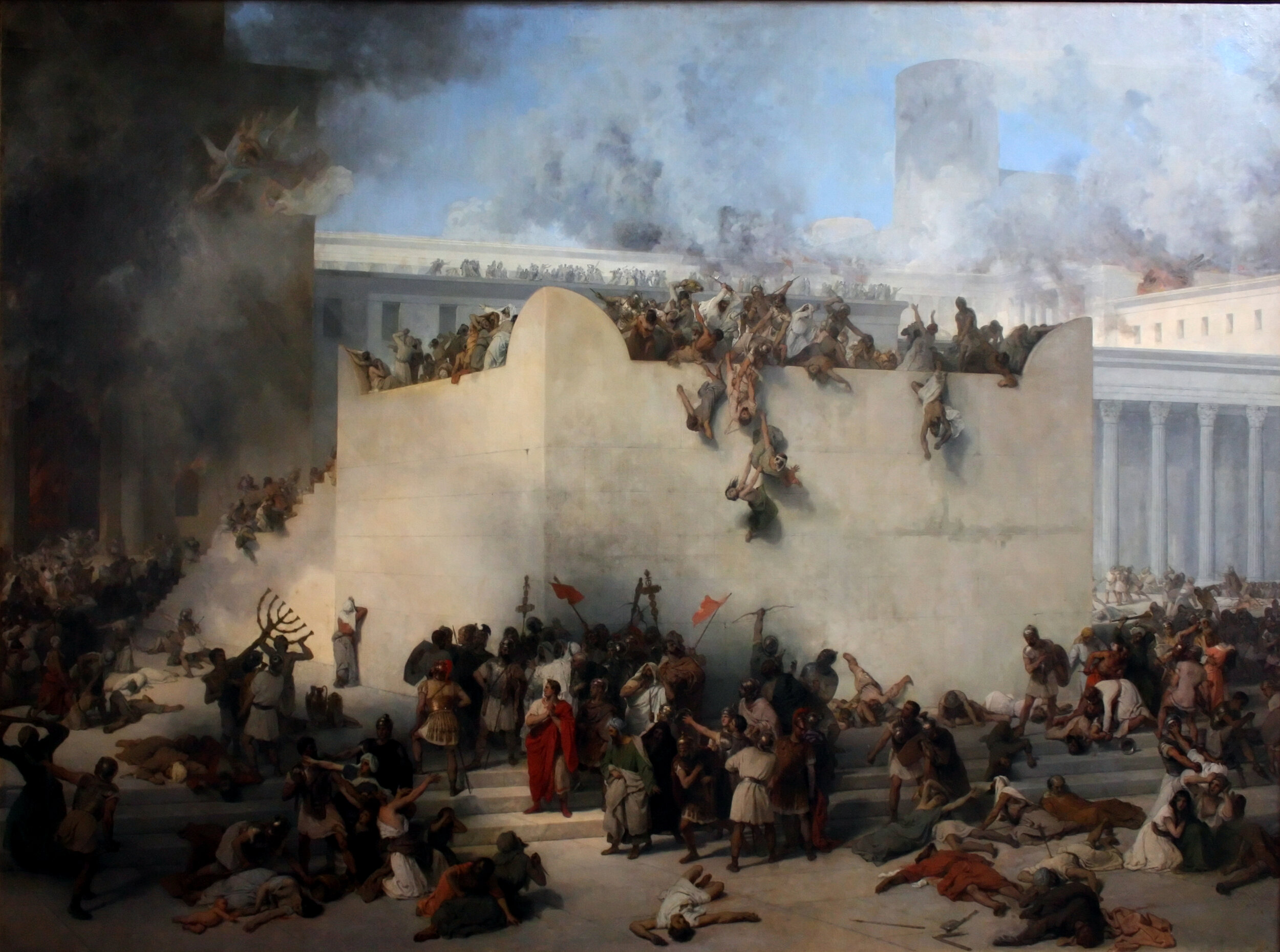
Therefore he brought up against them the king of the Chaldeans, who killed their young men with the sword in the house of their sanctuary and had no compassion on young man or virgin, old man or aged. He gave them all into his hand. And all the vessels of the house of God, great and small, and the treasures of the house of the Lord, and the treasures of the king and of his princes, all these he brought to Babylon. And they burned the house of God and broke down the wall of Jerusalem and burned all its palaces with fire and destroyed all its precious vessels. He took into exile in Babylon those who had escaped from the sword, and they became servants to him and to his sons until the establishment of the kingdom of Persia, to fulfill the word of the Lord by the mouth of Jeremiah, until the land had enjoyed its Sabbaths. All the days that it lay desolate it kept Sabbath, to fulfill seventy years.
The Proclamation of Cyrus
Now in the first year of Cyrus king of Persia, that the word of the Lord by the mouth of Jeremiah might be fulfilled, the Lord stirred up the spirit of Cyrus king of Persia, so that he made a proclamation throughout all his kingdom and also put it in writing: “Thus says Cyrus king of Persia, ‘The Lord, the God of heaven, has given me all the kingdoms of the earth, and he has charged me to build him a house at Jerusalem, which is in Judah. Whoever is among you of all his people, may the Lord his God be with him. Let him go up.’”

Three back-to-back-to-back kings of Israel ruled more evil than the last until ultimately, the very priests of God rebelled with them.
Yet pause to reflect on the throughline of Scripture embedded here: creation, fall, redemption, restoration.
In a passage devoted to destruction, the idea of creation lies hidden within context. The Lord established his people in the land long promised to Abraham. He “made holy” his house (verse 14), the focal point of the kingdom and most sacred space for his worship, built with the riches he gave to Solomon.
But all was not perfect.
Because of his people’s blatant rebellion, God sent Nebuchadnezzar to exact His judgment and undo His promise of the land–putting them right back where they started with Abraham: in Chaldean hands. As Matthew Henry wrote:
Now his degenerate seed were carried into that country again, to signify that they had forfeited all that kindness wherewith they had been regarded for the father’s sake, and the benefit of that covenant into which he was called; all was now undone again [emphasis added].
In a mirror image of his character, the compassionate God sent a compassionless conqueror. The God of mercy to the most vulnerable used a merciless man.
God’s wrath was swift, total, and sure. There remained nothing but the poorest of the poor. He even let his own temple be decimated.
Just as He allowed the Messiah to be crucified: humiliated and decimated.
God’s wrath–and his word–had been fulfilled.
The Promised Land held no hope. What once abounded with milk & honey lay barren and desolate. For seventy years during hopelessness captivity, the people cried for deliverance.
Note how the author did not end his chronicle in despair. Just as the promised destruction came, so too would the promised redemption.
Hope dawned when God led Cyrus king of Persia to free God’s people so “the word of the LORD by the mouth of Jeremiah might be fulfilled” (2 Chronicles 36:22).
A promise waiting 150 years came true when God restored the nation to its land. He revealed through Isaiah that Cyrus–by name–would rebuild God’s house.
The Lord rebuilt and restored because he is faithful. The same God who delivered his people then now has built his house using the cornerstone the builders rejected and delivered us, a people for his own possession (1 Peter 2:7,9).
It’s the same compassion continuing to pursue us.
And while there will be another day of the Lord marked by total destruction, we will see the final inauguration of his kingdom. Those who are redeemed will not be carried into captivity, but into glory.
Come quickly, Lord Jesus. Make all the sad things untrue once more.
Matt Williamson is a marketing project manager freelancing out of Greenville, SC. When he’s not managing creative teams, you can find him running, thinking about running, or coaching high school runners.

Lent Day 29
by Matt Poss
Ps. 122
I was glad when they said to me,
“Let us go to the house of the LORD!”
Our feet have been standing
within your gates, O Jerusalem!
Jerusalem—built as a city
that is bound firmly together,
to which the tribes go up,
the tribes of the LORD,
as was decreed for Israel,
to give thanks to the name of the LORD.
There thrones for judgment were set,
the thrones of the house of David.
Pray for the peace of Jerusalem!
“May they be secure who love you!
Peace be within your walls
and security within your towers!”
For my brothers and companions’ sake
I will say,“Peace be within you!”
For the sake of the house of the LORD our God,
I will seek your good.

This past year Iowa faced one of the most devastating storms to ever sweep across its golden plains. The derecho raged across the state, uprooting trees, tearing down power lines, and ripping apart homes with impunity. It caused over seven billion dollars in damage and left thousands destitute.
As I watched the derecho rage through Des Moines, I felt a mix of awe and fear. What could I do amid such a powerful storm? Humanity could not withstand the hurricane-force winds. No man-made wall could stand against its fury. From my apartment I could do nothing to stop its claws from tearing the roof off the building across the street. I was helpless.
There are few things as humbling as a storm. Mankind has never been able to control the weather. The best we can do is huddle in our homes and pray for the winds to pass over us. As we look upon the darkened skies and flashing lightning, we are reminded of just how pitiful and weak we are. We yearn for security, peace, and safety, yet every castle we build only delays the inevitable. Each storm wears away at our fortress until nothing but a pile of rocks is left.
We, like our creations, are temporary things. However, our desires stretch far beyond this world. We are stuck with needs that cannot be fulfilled by anything around us, and every disaster is a reminder of how fragile our “solutions” are.
When our so-called solutions fail and our world is in shambles, we seek out the One who can provide eternal security. In Psalm 122 God calls us to ascend to His home. He houses us in a fortress that will never yield a single stone to assailants and feeds us from storehouses that are always full. Under His care is grace that strips the sin from our souls and clothes us in salvation.
During Lent we remember that Christ sacrificed Himself to build that fortress for us. This fortress will not protect us from rain or wind, but it stands stalwart against the greatest storm of all: the sin in our hearts. We are the cause of spiritual storms, but through His death and resurrection He calms the storms and gives us the eternal peace we yearn for. All we need to do is to cast our weakness and sin on His altar and let Him do the rest.
Matthew writes dystopian science fiction and fantasy novels in his free time. He loves video games, running, all things fantasy, politics, and reading biographies of his favorite politicians. Matthew co-authors a blog, The Poss Post, with his wife Christina. He also writes love poetry to his wife.
Lent Day 28
by Jeff Boatner
John 6: 1-15
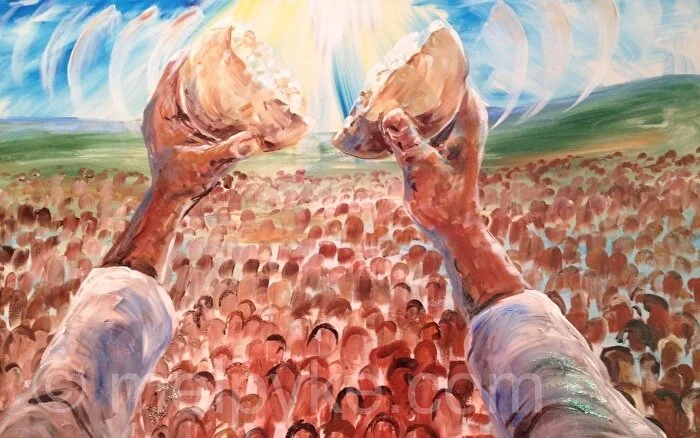
After this Jesus went away to the other side of the Sea of Galilee, which is the Sea of Tiberias. And a large crowd was following him, because they saw the signs that he was doing on the sick. Jesus went up on the mountain, and there he sat down with his disciples. Now the Passover, the feast of the Jews, was at hand. Lifting up his eyes, then, and seeing that a large crowd was coming toward him, Jesus said to Philip, “Where are we to buy bread, so that these people may eat?” He said this to test him, for he himself knew what he would do. Philip answered him, “Two hundred denarii worth of bread would not be enough for each of them to get a little.” One of his disciples, Andrew, Simon Peter's brother, said to him, “There is a boy here who has five barley loaves and two fish, but what are they for so many?” Jesus said, “Have the people sit down.” Now there was much grass in the place. So the men sat down, about five thousand in number. Jesus then took the loaves, and when he had given thanks, he distributed them to those who were seated. So also the fish, as much as they wanted. And when they had eaten their fill, he told his disciples, “Gather up the leftover fragments, that nothing may be lost.” So they gathered them up and filled twelve baskets with fragments from the five barley loaves left by those who had eaten. When the people saw the sign that he had done, they said, “This is indeed the Prophet who is to come into the world!”Perceiving then that they were about to come and take him by force to make him king, Jesus withdrew again to the mountain by himself.

In its essence, Lent is a season of preparation characterized by self-examination and repentance. The process has historically been facilitated by acts of self-denial and enacted with a posture of dependence and expectation. Given that, Jesus’ miraculous feeding of 5,000 may be a surprising passage for Lenten reflection. It shows us Jesus in some of his most powerful and most playful public ministry. Jesus takes the small offering of a small boy—five loaves and two fishes—and transforms them into superabundance. There are even leftovers.
Taking Lent as a backdrop to the passage, I am reminded of two other scenes from the life of Jesus where bread was a central feature. The first scene comes when our Lord was led into the wilderness to fast and be tested for a period of 40 days. The second scene is the one we call the Last Supper.
We follow Jesus into the desert wilderness as we engage this season of Lent. We follow him into remembrance of, and total dependence on, the presence and provision of the Father. We follow him even into his temptation, and the shortcut offered by the tempter: The illusion that we can have what we want or need on our own terms, and in our own time. It is the sin of Esau, who forfeited his future for a bowl of stew. Showing a better way, Jesus chose to entrust his deepest need to his loving Father.
In doing so, he provides us with a model for our own journey into Lent. Jesus moves from fasting to feasting, from self-denial to self-offering. For his own false-fullness, our Lord wouldn’t turn a stone to bread, but in compassion for the multitudes, he did make a few loaves into more than enough. Ultimately, we know that Jesus gave himself as the Bread of Life: that our sinful bodies might be made clean by his body.
That brings us to the second scene: the Last Supper. Each week when we come to Christs’ table and partake of the bread that is his body. Every single week, multitudes worldwide are fed.
What does Jesus want to teach you about your appetites and your deepest needs as you follow his journey from the wilderness to the Eucharist Table?
Create in us, O Lord, a hunger for the substance of yourself—that we may evermore dwell in you and you in us. Amen.
Jeff works as a professional counselor and teaches counseling at Liberty University. He loves to read the classics, listen to podcasts and music (especially jazz), and spend time in nature. He has recently taken up fishing, but isn’t very good at it yet. Originally from San Diego, California, he now lives in Virginia with his wife, Barbara, and their four children.
Lent Day 27
by Lisa H.
2 Chronicles 36:14-23, Furthermore, all the leaders of the priests and the people became more and more unfaithful, following all the detestable practices of the nations and defiling the temple of the LORD, which he had consecrated in Jerusalem.
The LORD, the God of their ancestors, sent word to them through his messengers again and again, because he had pity on his people and on his dwelling place. But they mocked God’s messengers, despised his words and scoffed at his prophets until the wrath of the LORD was aroused against his people and there was no remedy. He brought up against them the king of the Babylonians, who killed their young men with the sword in the sanctuary, and did not spare young men or young women, the elderly or the infirm. God gave them all into the hands of Nebuchadnezzar. He carried to Babylon all the articles from the temple of God, both large and small, and the treasures of the LORD’s temple and the treasures of the king and his officials. They set fire to God’s temple and broke down the wall of Jerusalem; they burned all the palaces and destroyed everything of value there. He carried into exile to Babylon the remnant, who escaped from the sword, and they became servants to him and his successors until the kingdom of Persia came to power. The land enjoyed its sabbath rests; all the time of its desolation it rested, until the seventy years were completed in fulfillment of the word of the LORD spoken by Jeremiah. In the first year of Cyrus king of Persia, in order to fulfill the word of the LORD spoken by Jeremiah, the LORD moved the heart of Cyrus king of Persia to make a proclamation throughout his realm and also to put it in writing:
This is what Cyrus king of Persia says: “ ‘The LORD, the God of heaven, has given me all the kingdoms of the earth and he has appointed me to build a temple for him at Jerusalem in Judah. Any of his people among you may go up, and may the LORD their God be with them.’ ”
Psalm 122
I rejoiced with those who said to me, “Let us go to the house of the LORD.”
Our feet are standing in your gates, Jerusalem.
Jerusalem is built like a city that is closely compacted together.
That is where the tribes go up— the tribes of the LORD— to praise the name of the LORD according to the statute given to Israel.
There stand the thrones for judgment, the thrones of the house of David.
Pray for the peace of Jerusalem: “May those who love you be secure.
May there be peace within your walls and security within your citadels.”
For the sake of my family and friends, I will say, “Peace be within you.”
For the sake of the house of the LORD our God, I will seek your prosperity.
Ephesians 2:1-10, As for you, you were dead in your transgressions and sins, in which you used to live when you followed the ways of this world and of the ruler of the kingdom of the air, the spirit who is now at work in those who are disobedient. All of us also lived among them at one time, gratifying the cravings of our flesh and following its desires and thoughts. Like the rest, we were by nature deserving of wrath. But because of his great love for us, God, who is rich in mercy, made us alive with Christ even when we were dead in transgressions—it is by grace you have been saved.
And God raised us up with Christ and seated us with him in the heavenly realms in Christ Jesus, in order that in the coming ages he might show the incomparable riches of his grace, expressed in his kindness to us in Christ Jesus.For it is by grace you have been saved, through faith—and this is not from yourselves, it is the gift of God—not by works, so that no one can boast. For we are God’s handiwork, created in Christ Jesus to do good works, which God prepared in advance for us to do.
John 6:1-15 As for you, you were dead in your transgressions and sins, in which you used to live when you followed the ways of this world and of the ruler of the kingdom of the air, the spirit who is now at work in those who are disobedient. All of us also lived among them at one time, gratifying the cravings of our flesh and following its desires and thoughts. Like the rest, we were by nature deserving of wrath. But because of his great love for us, God, who is rich in mercy, made us alive with Christ even when we were dead in transgressions—it is by grace you have been saved. And God raised us up with Christ and seated us with him in the heavenly realms in Christ Jesus, in order that in the coming ages he might show the incomparable riches of his grace, expressed in his kindness to us in Christ Jesus. For it is by grace you have been saved, through faith—and this is not from yourselves, it is the gift of God—not by works, so that no one can boast. For we are God’s handiwork, created in Christ Jesus to do good works, which God prepared in advance for us to do.

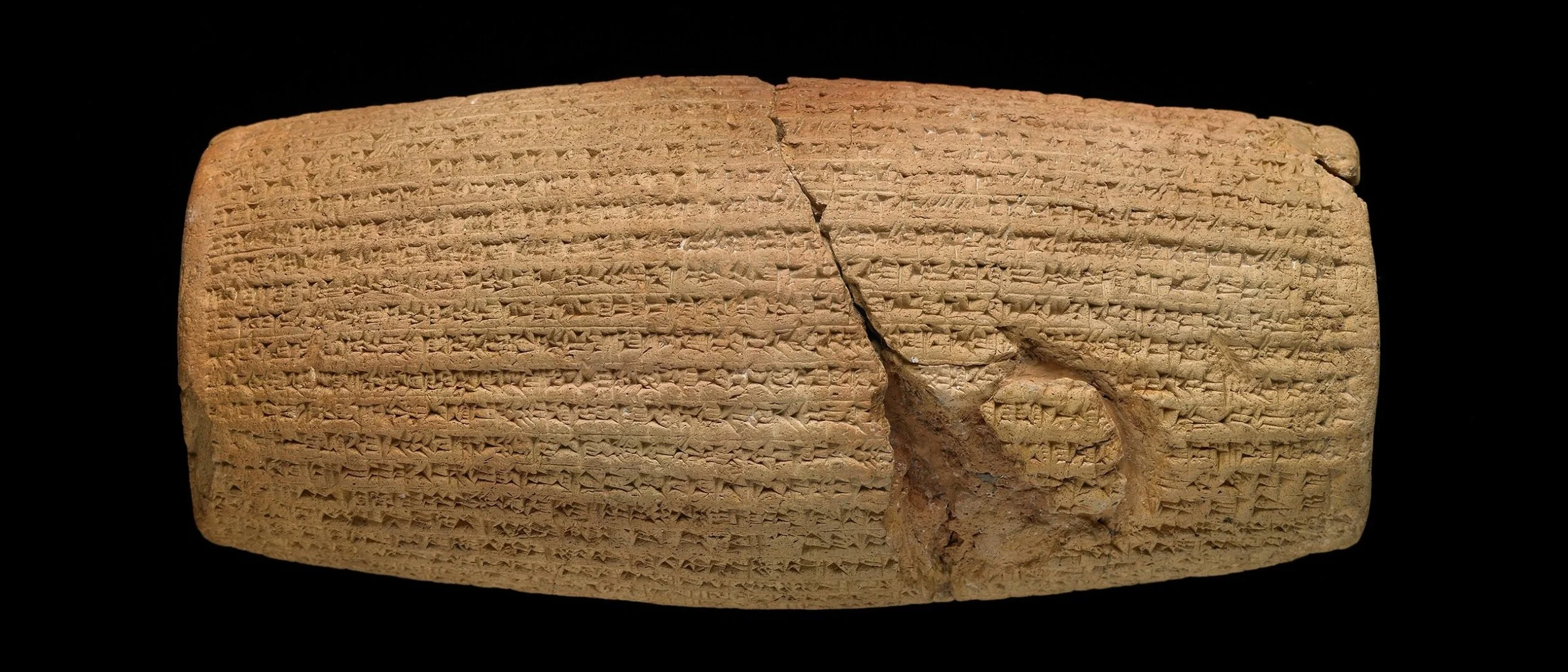
The Cyrus Cylinder, believed to be one of the oldest declarations of religious freedoms and human rights.
Dear fellow pilgrim in this foreign land,
This road may seem weary and bleak. Find your resting place in the arms of the God of the Israelites who persistently pursues us, who has compassion on us, who stirs the hearts of those who are in power over us (2 Chr. 36), whose dwelling place is peace (Ps. 122), who provides for us, who is the miracle worker (John 6), who rescues us in the midst of darkness, who is rich in mercy and love toward us, who has had grace on us and continues to have grace on us (Eph 2).
God continued to have grace on the Israelites and pursued them though they disobeyed and worshipped other gods. Even in their tribulation, He was turning the heart of king Cyrus towards providing His people with opportunity to worship Him freely. This shows that God is ever patient and has a heart of continual pursuit towards His people. Amazing. He is indeed a gracious, forgiving, loving, compassionate God.
Sometimes in our lives, it feels like our world has been taken over – not by a Persian army, but by other burdening forces. Rest assured that the God who pursued and provided for the Israelites when they were constantly rebelling is the same God who pursues us when we are tired, rebelling, or surrounded by darkness. Even when we cannot see, God is working and is in control.
Perhaps today, meditate on an attribute of God in your quiet time. Close your eyes and fixate your heart and thoughts on who He is. Focus on how you have experienced God in this way in your life. Thank Him and praise Him for who He is, and go about your day remembering this attribute.
May your journey today feel lighter in the presence of our God who is continually pursuing you with His love, compassion, and grace.
Lisa H. began going to church 9 months before she was born. Her spiritual journey has been one full of valleys and mountaintops but always always by the grace of God. She lives in Iowa with her family and her yellow dog and attends church where her boyfriend is the worship director.

Lent Day 26
by Jonas Davison
John 6:1-15
After this Jesus went away to the other side of the Sea of Galilee, which is the Sea of Tiberias. And a large crowd was following him, because they saw the signs that he was doing on the sick. Jesus went up on the mountain, and there he sat down with his disciples. Now the Passover, the feast of the Jews, was at hand. Lifting up his eyes, then, and seeing that a large crowd was coming toward him, Jesus said to Philip, “Where are we to buy bread, so that these people may eat?” He said this to test him, for he himself knew what he would do. Philip answered him, “Two hundred denarii worth of bread would not be enough for each of them to get a little.” One of his disciples, Andrew, Simon Peter's brother, said to him, “There is a boy here who has five barley loaves and two fish, but what are they for so many?” Jesus said, “Have the people sit down.” Now there was much grass in the place. So the men sat down, about five thousand in number. Jesus then took the loaves, and when he had given thanks, he distributed them to those who were seated. So also the fish, as much as they wanted. And when they had eaten their fill, he told his disciples, “Gather up the leftover fragments, that nothing may be lost.” So they gathered them up and filled twelve baskets with fragments from the five barley loaves left by those who had eaten. When the people saw the sign that he had done, they said, “This is indeed the Prophet who is to come into the world!”
Perceiving then that they were about to come and take him by force to make him king, Jesus withdrew again to the mountain by himself.

Family Portrait by Subodh Gupta
Our family moved to Japan in the fall of 2019. One aspect of life here is that Japanese recycling is at a whole ‘nother level. Got a plastic bottle you’d like to get rid of? Take the label off, put it in one bin, and put the bottle in another. And don’t try putting it in the “burnable trash” bag - they check!
I love that Jesus, after feeding 5,000 people from a first-century kid’s lunchable, tells the disciples to collect the leftovers so they won’t go to waste. Jesus can obviously feed any number of people any time he wants, with next-to-no earthly resources. So why bother collecting the leftovers?
Three points in this passage stick out at me. The first is the significance of the leftovers themselves: 12 baskets, one for each of the 12 tribes of Israel. Christ can feed his covenant people with his leftovers. Second, Christ models enjoying the bounty of the Kingdom as a son or daughter of the King, while simultaneously stewarding that bounty. Continuing as emissaries of Christ on the earth, then, we follow him when we exhibit both trust in his providence and stewardship of that providence. We err when we forget that he is our provider and overly rely on our ability to scrimp and save, or when we forget that we are his stewards and waste wantonly (I promise, wantonly is a word).
Lastly, by extension, if our good King did not waste a few crusts of bread, then even on the likes of you and me, his purchase of our freedom by the blood of his cross is not a waste. As bad as we are - full of selfishness and sin - Jesus is still collecting the leftovers. Nor does he waste our lives in his service. We can trust that he “keeps track of all our sorrows,” (Psalm 56:8), and will fill us even with his very self (Ephesians 1:23). As has been said elsewhere, he’s not safe, but he’s good. He will bring us safely through, and we will get in.
Jonas and his family are part of a team of church planters and artists working in the city-center of Tokyo, Japan. He is a classical flutist and music producer, and served 7 years with the U.S. Army Bands until God called his family into ministry among the Japanese, who remain the world’s second-largest unreached people group. More about the Davison family can be found at http://davisonfam.epistle.today.

Lent Day 25
by Joanna Bursch
Psalm 19:7-14
The law of the Lord is perfect,
reviving the soul;
the testimony of the Lord is sure,
making wise the simple;
the precepts of the Lord are right,
rejoicing the heart;
the commandment of the Lord is pure,
enlightening the eyes;
the fear of the Lord is clean,
enduring forever;
the rules of the Lord are true,
and righteous altogether.
More to be desired are they than gold,
even much fine gold;
sweeter also than honey
and drippings of the honeycomb.
Moreover, by them is your servant warned;
in keeping them there is great reward.
Who can discern his errors?
Declare me innocent from hidden faults.
Keep back your servant also from presumptuous sins;
let them not have dominion over me!
Then I shall be blameless,
and innocent of great transgression.
Let the words of my mouth and the meditation of my heart
be acceptable in your sight,
O Lord, my rock and my redeemer.

The law of the Lord so often feels like a paradox. A rubbing of two conflicting sides, as Paul points out to us. We are constantly vying for what our spirit and flesh want and the law feels as though it boxes us in, dictates things to us what we don’t like or want. I so often long to follow the whims of today that tell me that I can determine the right path for myself. I can “follow my heart” to the right and holy place. I want to throw off the constraints of this law and walk in my own freedom. The law can feel like a cage.
But the Psalmist tells us that he deeply delights in the law of the Lord. That in the law of the Lord there is great joy. It revives his soul- it enlightens the eyes and is sweeter than honey. The constraints of the law seem to offer him freedom. This doesn’t make sense to me.
I’ve been thinking about how the law of the Lord is like a boat. A structure from which I can endlessly enjoy and immerse myself in the beauties of the lake around me. If I got out of the boat, and swam in the water, I could also enjoy this beauty, but I would get tired. My muscles would ache, my body temperature would rebel against my wishes and if I continued to dwell in the water, I would die.
The law of the Lord is like a boat. It is a saving raft of structured care. It holds me, hems me in and allows me freedom to delight in the goodness surrounding me. Without the care and safety of the confines of my boat I am directionless, exposed, and in danger.
The guidance of our Father’s hand- the kindness of His instruction- affords us safety, freedom and abiding joy. We can be like children who are safe, guarded and free to be amazed by our surroundings.
The song accompanying this reflection is one of pure joy and surrender. I hear the rejoicing of the Psalmist in its exuberance.
“The law of the Lord is perfect, reviving the soul; the decrees of the Lord are sure, making wise the simple; the precepts of the Lord are right, rejoicing the heart…”
This is where true joy and freedom are found.
Joanna Bursch is a worship leader along with her husband at Village Anglican Church in Greenville, SC.

Lent Day 24
by Christina Poss
Romans 7:12–25
So the law is holy, and the commandment is holy and righteous and good.
Did that which is good, then, bring death to me? By no means! It was sin, producing death in me through what is good, in order that sin might be shown to be sin, and through the commandment might become sinful beyond measure. For we know that the law is spiritual, but I am of the flesh, sold under sin. For I do not understand my own actions. For I do not do what I want, but I do the very thing I hate. Now if I do what I do not want, I agree with the law, that it is good. So now it is no longer I who do it, but sin that dwells within me. For I know that nothing good dwells in me, that is, in my flesh. For I have the desire to do what is right, but not the ability to carry it out. For I do not do the good I want, but the evil I do not want is what I keep on doing. Now if I do what I do not want, it is no longer I who do it, but sin that dwells within me.
So I find it to be a law that when I want to do right, evil lies close at hand. For I delight in the law of God, in my inner being, but I see in my members another law waging war against the law of my mind and making me captive to the law of sin that dwells in my members. Wretched man that I am! Who will deliver me from this body of death? Thanks be to God through Jesus Christ our Lord! So then, I myself serve the law of God with my mind, but with my flesh I serve the law of sin.

Splendor by Makoto Fujimura
Darkness covers the earth
like an ominous cloud
before a storm.
Humanity is proud
before our Maker
though our knees should be bowed.
Gray charcoal pain,
black tainted skies,
all of us are in chains
to sin, hell, and death.
All our striving is in vain,
we are but a mist, a mere breath.
We cannot rescue anything,
not ourselves or the world
from its enslaved state.
The world is crooked, not straight.
All our plans God seems to frustrate.
Like helpless babies we sit and wait
for a renewed creation,
our true destiny and fate.
Just as the sin curse is complete
so His redemptive work will be concrete.
He didn’t save us for an earth replacement,
He will reform what once was sweet,
a restored Earth will be His final feat.
Come, sweet Jesus!
Come soon indeed.
The world groans and bleeds
for You to set things right again,
for You to make things new and reign,
for all suffering to end its strain,
for our souls to sigh in joyful amen.
There is an end to earth’s melodic mundane,
and Jesus surely will sustain,
for every broken heart and song,
He’ll bring us glory and right every wrong.
Do you ever have those days when you cannot shake the shackles of sin nor muster up a desire for God? Paul the apostle had days like that. Isn't that reassuring? This is the walk of the Christian: the war between our sinful flesh and the Spirit that lives within us. "For I do not understand my own actions. For I do not do what I want, but I do the very thing I hate." (Rom. 7:15) We are "sold under sin" (vs. 14) and we live in an in-between state between the already (Jesus' death and resurrection) and the not-yet (eternity on the new heaven and new earth).
Paul admits that he cannot be completely cured of his sinful habits here and now. So where is the hope? For what purpose was Jesus' death and resurrection if Christians still struggle with sin? As long as we breathe on this present earth we fight against Satan, the world, and our flesh. But "Thanks be to God through Jesus Christ our Lord!" (vs. 25) for we "serve the law of God with [our] mind, but with [our] flesh [we] serve the law of sin" (vs. 25). Do you see the power of Jesus' sacrifice? We are no longer slaves to sin! It does not rule our minds. We have power through the Spirit to think on things above (Colossians 3:1-4). We can rest in the forgiveness of our past sins, live presently in Jesus' grace, and look forward to the day when all sin and fleshly struggles are forever obliterated. Jesus is our living hope, now and for all eternity.
Christina is a poet and essayist who recently self-published her first book, "A Haiku a Day Keeps the Winter Away." Her "real job" is working as a Product Owner at a financial services company. Christina lives in Des Moines, Iowa where she co-authors a blog, The Poss Post, with her husband, Matthew.
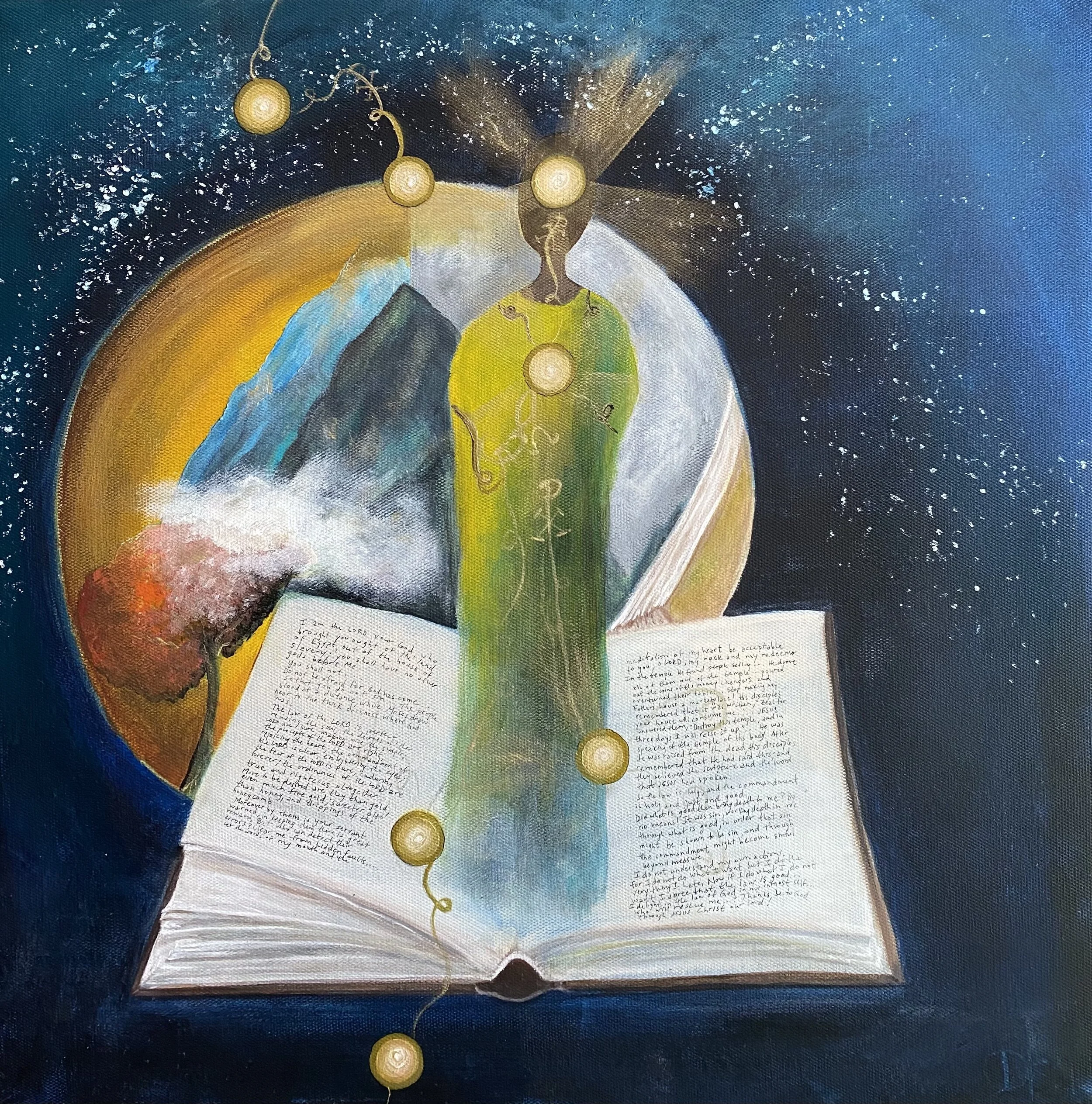
Lent Day 23: An Artist's Reflection
Perceiving What I Have Received, by Debra Fehsendfelt
This piece of symbolic art suggests a way of coming, seeing, and knowing. Perceiving What I Have Received was inspired by Exodus 20, Psalm 19, John 2, & Romans 7.

Notice that the central activity in this painting is the activity of God with the human person (gold wheels = vital activity of the Breath of God), but not only with the human person. Divine activity (every hint of gold) connects every element and extends into and beyond the suggested heights and depths.
The book/written word of God is also positioned in a central location, though in the lower half of the painting because the written word is a creation of man, inspired by God. The written word enables perception (suggested by the flow of gold [Divine action] from the pages of the book through the human being) and stability (gravity/ intact ground on which to stand...suggesting that beyond the word of God is zero gravity/ space).
We do not see the person’s face, the person’s feet or the person’s hands. This suggests that our attention is not intended to rest on the person as the principle subject of the painting. But we are led to wonder: why is this person’s back turned toward us? Toward what or whom is this person turned? And why are her/his hands and feet not manifest in this painting?
We are to notice what the person is noticing. Fed by the word of God, this person is simultaneously and perceptively reading another book...the Book of Nature, that which God has created (the earth is represented as half sun/half moon, with aspects of nature and the change of seasons depicted in the colors and elements, as well as the sky beyond the earth, representing all that is invisible and unknown, yet also created). The person brings nothing of his/her own making to this process (thus, no hands or feet); it is presently hers/his only to receive and perceive. It is all gift.
The colors of the painting are colors of raw nature...except for the gold. To find gold like this in nature, one must search with intention and perception. It is there, but it is on the side of a buried rock or where the light hits the ice just right. When discovered, it is magnificent.
The person’s clothing symbolizes one who lives both within (green) and beyond (yellow) the visible, known world. Gold is woven through the green and the yellow.
The children of Israel in Exodus, David in the psalm, the disciples in John, Paul in Romans...they are all seeking sense in what they experience. They must reach back in their memories and perceive what it is they have received. This requires coming, turning toward the One who transforms and enables the human senses to perceive “Gold” in every nook and cranny of lived experience.
Of joyous note — the subtle hint of darkness (black lines) being overrun by the flow of gold, both within the person and without. This is most evident with a closer look at the gold wheels. They appear to be pushing back darkness and misperception. Each is surrounded by a band of darker gold, outlined with a fine line of black...as if the black is shrinking and will soon be altogether obliterated.
Lent Day 22
By Cassie Chase,
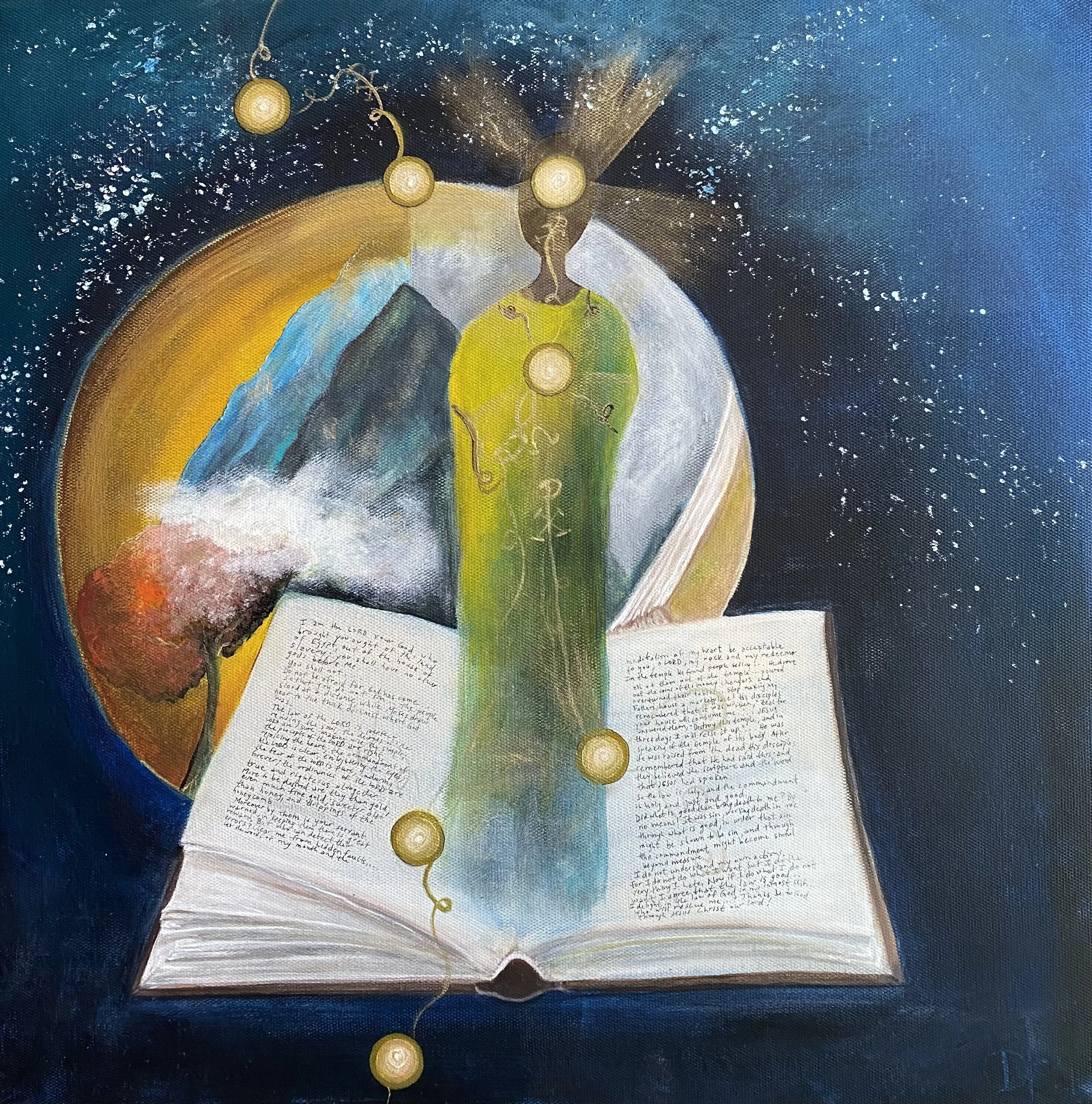
with music by Lauren Moisa and art by Debra Fehsenfeld
Ps. 19:7a, 8
“The instructions of the Lord are perfect, reviving the soul. The commandments of the Lord are right, bringing joy to the heart. The commands of the Lord are clear, giving insight for living.
Exodus 20:5a-6
…for I, the Lord your God, am a jealous God who will not tolerate your affection for any other gods…But I lavish unfailing love for those who love me and obey my commands.
John 2:16-17
Then, going over to the people who sold doves, he told them, “Get these things out of here. Stop turning my Father’s house into a marketplace!”17 Then his disciples remembered this prophecy from the Scriptures: “Passion for God’s house will consume me.”
Romans 7:24b-25a
Who will free me from this life that is dominated by sin and death? Thank God! The answer is Jesus Christ our Lord!
My dear brothers and sisters- How is it with your dwelling place? What’s consuming your attention lately? Exhaustion, sickness, relational strife?
At the time that David cried out: “Passion for your dwelling place consumes me” in Psalm 69, his heart was broken, he was exhausted and overwhelmed, his body was suffering and in pain, he was entrenched with shame. He was crying out to a God that SEES and KNOWS all of this. He was reminding himself and the Lord of his passion, and the Lord’s unfailing love for those whose jealousy and affection is for HIM.
Take some time now, my dear brothers and sisters. Ask God to give you eyes to see. He created you and formed you and remembers you are from dust. He desires to realign your heart’s eyes and affection to be able to see and take hold of His affection. Intentionally return to God’s presence within. What is He inviting you to in this present moment? What help do you need from Him to be able to respond to His invitation?
As you listen to David’s prayer in the song, see what emotions resonate with you and let God know. As you meditate on the picture, see where the person’s attention is turned to.
Prayer: Jesus you came to let us consume you, to help us be consumed by you. The very physical nature of blood brings oxygen to all parts of our body, brings healing properties to areas of wounds, and filters out what doesn’t belong.
Come Lord Jesus, let your word revive my soul, bringing life and breath to my weary soul. May I co-labor with you in bringing that life to those we engage with this week.
Lord Jesus you see and know my hurt and pain. Pour out your spirit upon me, mending every part of me that is afflicted. Jesus, may your power flow through me, touching and healing the hearts of those I engage with this week.
Come Lord Jesus, what needs to be cleared out of your dwelling place? In your unfailing love oh Lord, help me release what tries to consume me.
Pour out your spirit upon me to be able to join you in returning your dwelling place back to a place of prayer.

Perceiving What I have Received by Debra Fehsenfeld
Reflection: Cassie Chase is passionate about co-laboring with Jesus to create a spiritually healthy culture among leaders in ministry, their communities and households, by giving them space to attend to their heart, mind, body and soul and find His affection there. She is currently practicing and furthering her education in spiritual direction and Massage Therapy. She is a big proponent of play and wonder and finds much joy in backpacking with ladies, playing in muddy cow fields with kids, and gardening in Lynchburg, VA where she currently lives.
Music: Lauren Moisa is a sonographer in Lynchburg, VA. She is passionate about seeing beauty in the world and in the lives of others. When she isn't doing ultrasounds, she enjoys playing piano, singing with friends, and exploring nature.
Art: Debra Fehsenfeld practices the art of counseling and spiritual direction and finds people and their complexities fascinatingly unique and beautiful. For her, painting is a way of seeing and becoming aware of the divine within the common; it is a form of prayer, listening and responding. She engages in life from southwest Michigan where she lives with her husband and four young adult children.

Lent Day 21
by Renee Chastain
Psalm 19:7-14
The Law of the Lord is perfect, restoring the soul;
The testimony of the Lord is sure, making wise the simple.
The precepts of the Lord are right, rejoicing the heart;
The commandment of the Lord is pure, enlightening the eyes.
The fear of the Lord is clean, enduring forever;
The judgments of the Lord are true; they are righteous altogether.
They are more desirable than gold, yes, than much pure gold;
Sweeter also than honey and drippings of the honeycomb.
Moreover, Your servant is warned by them;
In keeping them there is great reward.
Who can discern his errors? Acquit me of hidden faults.
Also keep Your servant back from presumptuous sins;
Let them not rule over me;
Then I will be innocent,
And I will be blameless of great wrongdoing.
May the words of my mouth and the meditation of my heart
Be acceptable in Your sight,
Lord, my rock and my Redeemer.
Romans 7:12-25
So then, the Law is holy, and the commandment is holy and righteous and good.
Therefore did that which is good become a cause of death for me? Far from it! Rather it was sin, in order that it might be shown to be sin by bringing about my death through that which is good, so that through the commandment sin would become utterly sinful.

Deliberation by Mario Sanchez Nevado
“Acquit me of hidden faults. . . keep Your servant back from presumptuous sins; Let them not rule over me.”
“. . . I do not understand what I am doing; for I am not practicing what I want to do, but I do the very thing I hate. . . . . Wretched man that I am! Who will set me free from the body of this death?”
Two men cry out to God for relief, both shortly after reveling and praising in the goodness of His law and commandments. Two men, centuries and worlds a part.
The first— King David. The second— Paul, the Apostle.
The first, having no knowledge of God’s specific path to redemption through the death and resurrection of Jesus Christ, and the second, a witness to this miracle that set us free.
Together, these testimonies speak to the importance of the law as a vehicle of blessing, when kept, and a revelation of God’s mercy and our need, when broken.
They echo the pleas of our own hearts as we collectively turn inward, examining our own sin and need of a Savior in this penitential season.
When reading and reflecting on these passages, I am struck by the continuity of the thread of redemptive history. How David, years before Christ, could see that he, left to his own devices, was powerless to attain perfection under the law. He cries to God, using the imperative as he begs God to, “Let them not rule over me,” which would result in his attaining innocence. An innocence possible only through the work of God. A God David calls his “Redeemer.”
As David looks forward to this hope, Paul looks back. He looks at Christ’s perfect sacrifice that began a new order, that birthed in him a new nature, one still at war with his old nature of sin and death. And he too cries out for the ultimate redemption of our souls, when all is made right and new and beautiful again. Because while the perfect sacrifice has come, the fullness of restoration has not.
As we reflect on the law, on our sin, on our need for Calvary, we, like Paul and David, don’t have to groan without hope. We can see our true natures without shame, knowing we have been given a gift in Christ. The law provides us this ability to reflect and to wrestle, not so that we beat our breasts in despair, but so that we may be truly, humbly grateful, rejoicing with Paul, who in the next chapter boldly proclaims that, “There is now no condemnation for those in Christ Jesus.”
Together, we remind each other of this hope. We cling to it on our darkest days, knowing that soon our redemption will be full, complete, and manifested in our resurrected bodies. Easter is coming. He is Risen! As we too, shall be. “Come,” we fervently pray, “Come, Lord Jesus.”
Hi, I’m Renee, an entrepreneur in the real estate and hospitality industry here in Greenville. I enjoy creating safe, relaxing places for people to gather from all over as they visit our city. When not working, I spend time on my “farm” (a rental on 30 acres of horse pasture) out in Dacusville with my animals—2 dogs, 6 cats, and 6 birds. In my free time I enjoy reading, learning about anything and everything, and dipping my toes back into the creative writing world.

Lent Day 20
by Michael King
Exodus 20:18-21
Now when all the people saw the thunder and the flashes of lightning and the sound of the trumpet and the mountain smoking, the people were afraid[d] and trembled, and they stood far off and said to Moses, “You speak to us, and we will listen; but do not let God speak to us, lest we die.” Moses said to the people, “Do not fear, for God has come to test you, that the fear of him may be before you, that you may not sin.” The people stood far off, while Moses drew near to the thick darkness where God was.
Romans 7:13-25
Did that which is good, then, bring death to me? By no means! It was sin, producing death in me through what is good, in order that sin might be shown to be sin, and through the commandment might become sinful beyond measure. For we know that the law is spiritual, but I am of the flesh, sold under sin. For I do not understand my own actions. For I do not do what I want, but I do the very thing I hate. Now if I do what I do not want, I agree with the law, that it is good. So now it is no longer I who do it, but sin that dwells within me. For I know that nothing good dwells in me, that is, in my flesh. For I have the desire to do what is right, but not the ability to carry it out. For I do not do the good I want, but the evil I do not want is what I keep on doing. Now if I do what I do not want, it is no longer I who do it, but sin that dwells within me.
So I find it to be a law that when I want to do right, evil lies close at hand. For I delight in the law of God, in my inner being, but I see in my members another law waging war against the law of my mind and making me captive to the law of sin that dwells in my members. Wretched man that I am! Who will deliver me from this body of death? Thanks be to God through Jesus Christ our Lord! So then, I myself serve the law of God with my mind, but with my flesh I serve the law of sin.

In sixth grade I entered St. Thomas Choir School — a boarding school in the heart of Manhattan. I was going to be part of a renowned choir, supporting transcendent services in a gothic-style cathedral — six services every week for the next three years.
The first-years were officially welcomed in an austere and beautiful service — organ, choir, and brass were blaring. The older boys were in pristine lock step with the movements of the service. The church held 1500 people, and that’s how many attended. About 15 minutes into this welcome service, I turned to my parents with tears in my eyes and said “can I go home now?”
It was overwhelming to experience such power, beauty, transcendence. Everything was overwhelming, and I remember thinking “How could there possibly be a place in all this for me?”
___________
I imagine the Hebrew people having something of a similar experience at the foot of Mt. Sinai. In our reading for today, the Lord spoke the Law to them. It was transcendent, powerful, beautiful. I imagine it left the Hebrews wondering: How could there possibly be a place in all this for me?
What they hadn’t realized yet was that they were not the focus of the Law, God was. In this Mosaic Covenant, YHWH was promising to shape the people of God — this is what I am like, and what you will become.
This is why Moses can encourage them: “Do not fear, for God has come to test you…” (Ex. 20.20a). “Testing” doesn’t sound very nice, but this was no mere pop quiz (as I confess I had assumed my first day at St. Thomas was — Is Michael going to be good enough?). This “testing” was the working-out of this promise to shape the Hebrews— like refining a bit of unearthed gold — into YHWH’s powerful force for good and restoration in the world.
Of course the Hebrews — God’s firstborn children — had a place in it, so long as they gave themselves to YHWH as their Father.
____________
It can be scary to come into contact with such profound beauty, goodness, and power. Paul describes this in our New Testament reading today: it is impossible for us to do what we know is right consistently! But that’s not the point of God’s giving of the Law. God was promising to make the Hebrews into the people of the good and the beautiful — he would teach them to live the language of YHWH.
God is still doing this work with his people today. Let us “delight in the Law of God, in my inner being…” (Rom. 7.22a), because our place depends not on our ability, but on God's promise. He will shape us in the image of the good and the beautiful (himself!), if only we will give ourselves to him.
This is the good news of the Gospel, that you can know true goodness and beauty in YHWH through the person of Jesus — and you have a place in it.
Michael King is an associate rector at Village Anglican Church. He enjoys singing, playing with his two wonderful boys, and cooking with his wife Hannah.